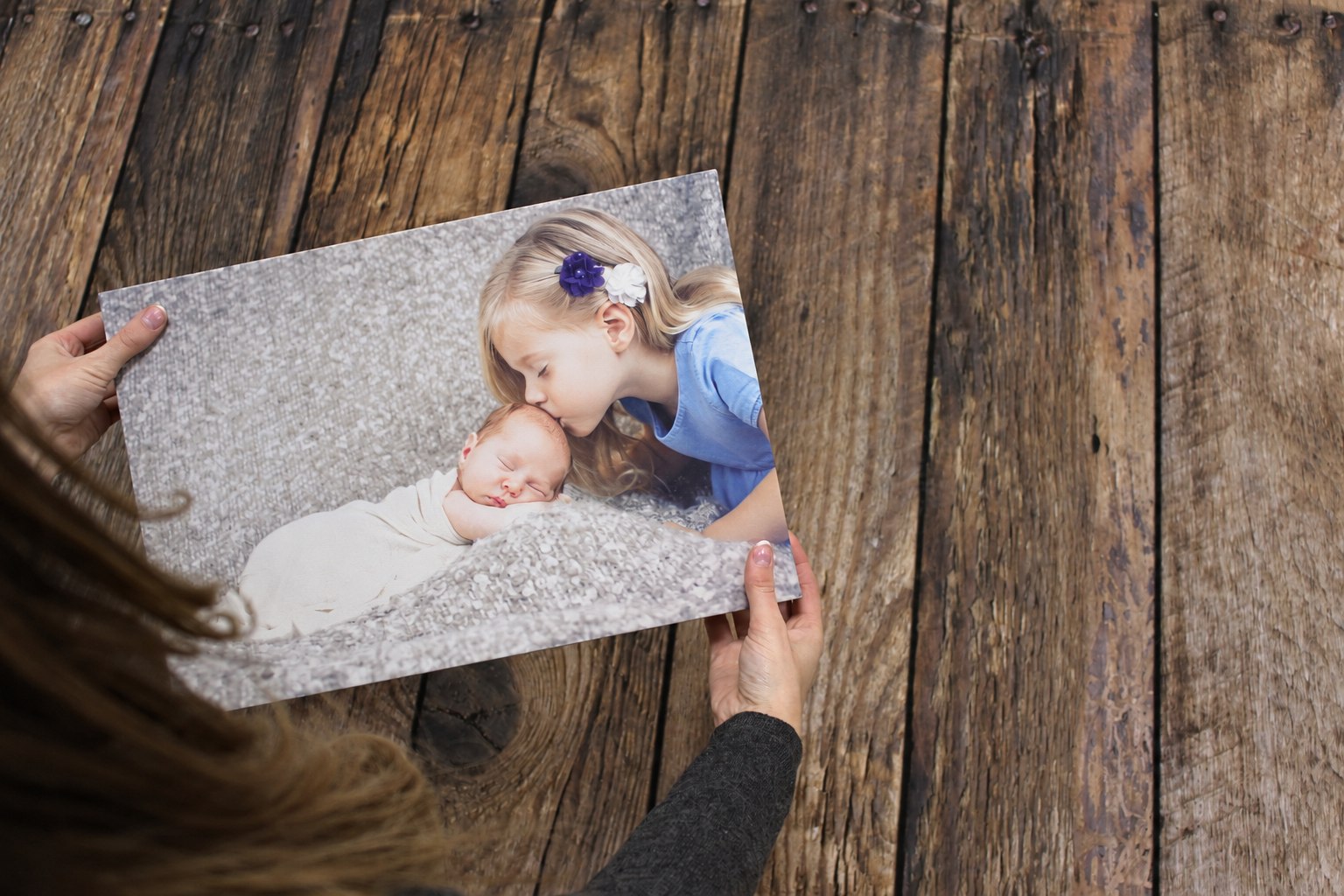
Your canvas is made to be enjoyed on the wall. Looking after it should be simple: choose a sensible place, handle it by the frame and give it only the lightest dusting when it needs it. Please leave the wet cloth and cleaning spray in the cupboard.
We print, make the pine frame, stretch the canvas and check the finished piece in our own West Yorkshire workshop. We want you to enjoy it for years, and the care advice here is deliberately gentle. Our canvas is unvarnished, so advice written for a varnished oil painting, a wipe-clean sign or a different coated print is not automatically right for it.
The close product and workshop photographs in this guide are real YI2C photographs. The room examples are AI-created placement illustrations. They help explain what to look for in a room; they are not fading tests, moisture experiments or proof that a particular distance from a window or cooker is safe.
How should you clean a YI2C canvas print? Use a very soft, dry duster for light dusting only. Do not rub the printed face, use water or apply cleaning products. Keep the canvas away from direct sunlight, heat, steam and damp conditions. If it has a mark, spill, scratch or other damage, stop and ask us for advice with a photograph before trying a remedy.
Start with the surface you actually have
A canvas print has several parts: the photograph printed onto the canvas, the material wrapped around the sides, and the timber stretcher behind it. An optional floating frame surrounds the stretched canvas. Each part has a job, and the printed face deserves the lightest handling.
A real YI2C canvas corner and surface. Treat the printed face gently; the knitted hat is part of the photograph.
Our canvas has a matte surface and is supplied without a varnish coat. You can see the real fabric texture and folded corner in the photograph above. The woolly hat in the baby picture is part of the photograph; the fine regular surface texture belongs to the actual canvas. Neither is a reason to scrub the print when it gathers dust.
It is easy to find conflicting cleaning tips online because the word “canvas” covers very different things. An original painting can have a different paint layer and coating. A commercial display may use a material intended for other conditions. Even two photo canvases can use different inks and surface treatments. Follow the advice for the print you own.
For a YI2C canvas, the method confirmed by our workshop is a very soft dry duster, with light dusting only. No rubbing, water or cleaning products. If you have a canvas from another maker, ask that maker about its particular surface. A useful care routine begins with knowing what is on the wall, rather than testing a household cleaner on a quiet corner.
If you are finding this guide before ordering, our canvas quality page shows the materials and finish, and Inside YI2C shows the real work behind them. These are photographs of things we have made, rather than a promise that a delicate printed surface can be treated like washable furniture.
The everyday method: very soft, dry and light
Most of the time, leave the print alone and enjoy it. Dust it when there is loose surface dust, using a clean, very soft, dry duster. The aim is to lift light dust with minimal contact. It is not to polish the canvas or work away a mark.
- Check the duster first. It should be clean, dry and free of grit, sticky residue or anything that might catch.
- Make sure the canvas is steady. Do not push against the face while it moves on the wall. If it needs taking down, support the frame and work somewhere clean and safe.
- Use the lightest contact. Give loose dust a gentle pass. Do not press into the fabric, rub back and forth or keep working over one spot.
- Stop if anything catches or resists. A fibre snag, a stubborn mark or a change in the surface calls for advice, rather than more force.
- Keep the method dry. Do not add water, polish, cleaner or a spray to the duster or the print.
There is no need to make this a weekly polishing job. A picture in a clean, quiet room may need very little attention. A room with open windows, building work or more airborne dust may need checking more often. The condition of the surface matters more than a calendar reminder to touch it.
If dust does not move easily with light dry dusting, stop. Increasing pressure can turn a simple dust problem into surface damage. Send us a clear photograph and explain what you can see. We would rather look at a small mark with you than hear that several cleaning methods have already been tried.
For an unusually large canvas, or a picture hung somewhere awkward to reach, do not stretch over furniture while holding it with one hand. Ask someone to help take it down safely if it needs moving. Access and support matter just as much as the softness of the duster.
Why we do not recommend a damp cloth
Water is not part of our recommended care method. A damp cloth can introduce moisture to the printed surface and encourage rubbing, even when the intention is gentle. Our unvarnished canvas is not sold as waterproof or wipe-clean.
The same applies to washing-up liquid, furniture polish, glass cleaner, alcohol wipes and general household sprays. Do not test them on the face, the wrapped sides or a small “hidden” area of the image. A test can still leave a visible change, and a cleaner intended for a hard surface is not evidence of compatibility with this print.
Keep aerosol sprays away from the artwork when cleaning the surrounding room. A spray aimed at a window or shelf can drift. If decorating or using products nearby, move the canvas to a suitable dry place first where you can do so safely. Wait until the work is finished and the area is clean before returning it.
Do not use steam, a hairdryer, an iron or a heat gun to deal with a mark or a change in tension. Do not apply a varnish, sealant or protective coating at home without discussing the exact product and print with us. A coating changes the surface, and “extra protection” is not a reason to guess.
If you have read a tip suggesting a wet cloth, remember that it may refer to a different material or finish. The short answer for our canvas remains the same: very soft dry dusting only, with no rubbing. A mark needs a conversation, rather than a stronger version of the everyday dusting routine.
Choose a wall with gentle light
Light makes a photograph enjoyable to look at, but prolonged direct sun is a poor location for a printed canvas. Choose a wall that lets you see the image clearly without a strong beam of sunlight travelling across it for long periods.
An AI-created placement illustration: consider a wall with indirect light. It is not a fading test or a measured exposure recommendation.
This imagined sitting room illustrates the idea of a picture on a wall lit indirectly. It does not establish a tested safe exposure. The real check happens in your room: look at the wall at different times of day, and remember that the sun's path changes through the year.
A window that seems harmless on an overcast afternoon can send direct sun onto the same wall another day. Curtains or blinds can help manage light, but consider the picture's position as well. There may be a nearby wall where the photograph is easier to see and receives less direct exposure.
We do not give a universal number of hours of sunlight that is safe, or a guaranteed lifespan for a print in every home. Image colours, conditions and exposure vary. Sensible placement gives the print a better environment without needing to turn the room into a gallery with laboratory controls.
Avoid solving a dark corner by placing a hot lamp close to the canvas. Check how a light fitting behaves during use, and keep the artwork away from excessive heat. If a particular display location has strong light or unusual conditions, describe it to us before ordering. It is easier to choose a better position than to reverse a change later.
Keep it away from heat, steam and damp
Choose an ordinary dry indoor location, away from obvious heat and moisture sources. A wall directly above a radiator, a spot beside a working fireplace, or a place repeatedly reached by cooking steam asks more of the canvas than a quieter wall elsewhere.
There is no single safe distance that works for every radiator, fire or cooker. Their output, the room's ventilation and the position of the picture vary. If the wall becomes hot, feels damp or regularly receives steam or splashes, choose another place rather than relying on an arbitrary gap.
An AI-created layout illustration. Its gap from the kitchen is not a tested safe distance or proof of moisture resistance.
In this fictional kitchen-dining illustration, the artwork is at the dining end, with the cooking area elsewhere in the layout. That is a way to think about the room, not a certification that the pictured gap is safe. In your own home, check where steam travels and where splashes actually land when the kitchen is being used.
Bathrooms and wet utility areas deserve particular thought. If the room often fills with condensation, a wall looks damp or towels are drying close to the picture, our unvarnished canvas is not the surface to treat as waterproof decoration. Ask us about the intended location before deciding on a print.
Avoid placing the canvas against an already damp wall. Hanging a picture over a mark will not solve the wall's moisture problem, and it can hide a change you need to notice. Address the room conditions and choose a dry, stable location for the artwork.
If you are choosing pictures specifically for a kitchen, our kitchen wall art guide discusses photographs, recipes and placement. It gives the same product-specific care advice: a soft dry duster, no wet cloth, sprays or scrubbing, and a message to the workshop if the print is marked.
A bedroom, living room or hallway: check the actual conditions
A room name alone does not tell you whether a position is suitable. A living room can have a hot wall above a fire. A bedroom can have condensation around a window. A hallway can be dry and calm, or narrow enough for bags and coats to knock the picture every day.
An AI-created bedroom example. Check the real room for direct sun, heat and condensation rather than relying on a room label.
For a bedroom, look at the clear wall, the window and nearby heat sources. Choose a position where the canvas can be securely supported and where everyday use does not bring it into contact with bedding, furniture or damp items. The imagined room above is a placement example, with no claim about a tested environment.
In a sitting room, notice what happens around the picture. A plant that needs misting, a frequently used candle or a shelf cleaned with spray can affect the choice. You do not need to remove every object from the room; give the print a place where normal household activity is less likely to reach its surface.
An AI-created hallway illustration. Consider doors, bags and passing objects in your own space; no fixing method or resistance to knocks is certified here.
For a hallway, consider the route through it. Leave the picture clear of doors, bags, coat hooks and furniture edges. Check the wall when the front door opens and when someone carries a parcel through. A print that is easy to brush against may be happier on a quieter wall.
These are practical observations, rather than a list of conditions a room must pass. Stand in the space and imagine a normal day. The best location is one where you enjoy the photograph and do not have to keep rescuing it from steam, sunlight or passing objects.
Moving a canvas: support the frame, spare the face
When you need to move the canvas, use clean, dry hands and support the timber frame. Keep fingers and pressure away from the printed face. The material is stretched across a structure; the picture surface is not a convenient place to push while turning it around.
The pine stretcher sits behind the canvas. Support the frame when moving a finished print.
The photograph shows real pine stretcher frames before the canvas is attached. That is the structure you are supporting when you handle a finished print. For a larger piece, get help so both people can control it comfortably, particularly through doorways or around furniture.
Clear the route before lifting it. Decide where it will go, remove obstacles and avoid carrying it while also holding a phone or opening a door. Keep the corners away from walls and hard edges. If you need to set it down temporarily, make sure the frame is supported on a clean, suitable surface and the printed face is protected from contact.
Do not press on the canvas to check how tight it feels, or lift a large print by one small section of wrapped fabric. If the surface or frame seems different from when it arrived, photograph the issue and ask us. We can look at the actual print instead of encouraging a home adjustment that may make it worse.
For a house move, plan the large pieces before the van is full. A canvas needs protection from rubbing, pressure and damp packing conditions. It should not become the flat surface between heavy boxes simply because it fits a narrow gap.
Keep the hanging arrangement under review
Use a hanging method suitable for the complete picture, its weight and the actual wall construction. The right fixing for one wall may be unsuitable for another. Follow the fixing manufacturer's directions and ask for help if you do not know what the wall is made from.
Check the complete piece if a floating frame is fitted. It is larger than the canvas alone, and the hanging arrangement must support the finished display. Choose the position before lifting the picture into place, and avoid repeatedly pushing the printed surface while trying to make it level.
When you notice the picture sitting differently, check the support rather than simply nudging it back every time. Look for a loose or damaged fixing, a change in the wall, or something rubbing against the frame. Take it down safely if the support seems unreliable, then sort out the cause.
We cannot identify a wall's construction from the phrase “plaster wall” alone, and we do not describe adhesive products as universally suitable, removable or damage-free. If you want advice about the supplied frame or hanging options, tell us which print you have. For the wall itself, use the relevant fixing information or a suitable installer. Our canvas hanging guide explains the next steps without turning care advice into a guess about your wall.
What changes when there is a floating frame?
An optional floating frame surrounds the stretched canvas, leaving a gap that gives the picture a different finish. The print inside still needs the same gentle care. The extra frame does not make the printed face waterproof or suitable for rubbing.
A real floating-frame canvas. Look after the printed surface and surrounding frame as separate parts.
Dust the surroundings lightly without forcing a duster into the gap or dragging it against the canvas edge. Avoid letting grit collect in a tool and then carrying it across the picture. If something is lodged where you cannot remove it gently, ask us rather than probing around the fabric with a sharp object.
Different frame finishes can need different care. Do not apply a furniture product or glass spray to the whole display simply because there is timber around it. Keep any product intended for another surface away from the canvas, and check the exact frame finish before attempting more than gentle dry dusting.
If the frame is knocked or a corner looks damaged, send a photograph of the whole piece and a closer detail. Explain whether the canvas itself is affected. That helps us distinguish a frame issue, a hanging issue and a mark on the print instead of treating them as the same problem.
A spill, mark or scratch: stop and show us
If something lands on the canvas, do not turn the everyday dusting advice into a stain-removal routine. Stop the source of the spill or spray where possible, keep further moisture or contact away, and contact us promptly with clear photographs and a description.
Tell us what happened, what the substance was, roughly when it happened and whether anything has already been applied. A drink, an oily mark, a scrape and ordinary dust are different situations. We do not want you to discover the difference by trying several remedies on the printed surface.
A real print check in our workshop. If a print is marked or damaged, send us a photograph before trying to clean it.
Start with one photograph of the whole canvas, then a close view of the affected area in ordinary light. A side angle can help show a crease or surface change, but do not bend or press the canvas to make it more visible. Include the frame and wrapped edge if either is involved.
Do not use water, soap, alcohol, an eraser, polish or a “magic” cleaning sponge. Do not scrape a dried mark with a fingernail. Do not use heat to hurry drying or tighten the surface. A repair method cannot be judged from the name of the stain alone, and some damage may not be reversible.
If a print has become damp or has signs of a wider moisture problem, tell us that too. Do not cover it in a new coating or keep it in a damp room while trying to disguise the change. We can discuss the particular print and whether further specialist advice or a replacement is the sensible route.
For a delivery issue, keep the packaging and photograph the outside and the affected print. Use our returns and replacements page for the current process. A clear account of what arrived helps us deal with the actual problem.
Storing it or taking it to a new home
Choose a dry, clean place with reasonably steady indoor conditions. Keep the canvas away from leaks, damp floors, excessive heat and direct sun. A loft, shed or garage can be quite different from the room where you normally display it, so look at the actual conditions before using it as a storage space.
A real canvas at our packing bench. Keep pressure and rough materials away from its printed face.
The real workshop photograph shows packing work in progress. It is not an instruction to press a particular material against the face for long-term storage. Packaging has to protect the finished piece without introducing rubbing, pressure or trapped moisture.
If the original packaging is clean, dry and undamaged, it can be a useful starting point when moving the print. Check how the piece is supported, and avoid putting weight on the printed surface. Keep sharp fixings and loose objects from contacting it. Ask us about packing if the journey or storage period is unusual.
Do not stack heavy items on top of the canvas or wedge it tightly between rough objects. Support the frame and protect the corners. For several prints, keep their surfaces from rubbing together and label the packages so someone else knows what is inside and which side needs care.
When taking the picture out again, open the packaging somewhere clean and spacious. Keep blades away from the print, lift by the frame and check the hanging arrangement before returning it to the wall. A rushed unpacking can be harder on a canvas than months of ordinary display.
Three messages you can copy when you need help
You do not need to diagnose the material or know the name of a printing process. Tell us what you can see and where the canvas is going. These messages help us ask the right follow-up questions. Replace the brackets and send them through our contact page.
Editable enquiry: Enquiry 1 — a mark or spill
Enquiry 1 — a mark or spill
Hi YI2C. My canvas has [describe mark/spill/scratch]. It happened [when], and the substance or cause was [what happened, if known]. I have [not applied anything/already tried the following — please specify]. I have attached a full view and a close photograph in ordinary light. The affected area is [front/wrapped edge/frame/back]. My order details are [details, if available]. Please advise before I attempt any cleaning or repair.
Editable enquiry: Enquiry 2 — choosing a position
Enquiry 2 — choosing a position
Hi YI2C. I would like to put a canvas in [room and wall position]. The nearby window, heat and moisture sources are [describe them]. Direct sun reaches the wall [what I have observed at different times], and the room has [any steam, condensation or damp issue]. I have attached a photograph of the intended position. The planned print is [size and optional frame]. Is there anything about this location I should check or change before ordering?
Editable enquiry: Enquiry 3 — moving, packing or a frame concern
Enquiry 3 — moving, packing or a frame concern
Hi YI2C. I need advice about [moving/storing/packing/a frame or hanging concern] for my [size] canvas, with [no outer frame/floating frame]. It will be [journey or storage conditions and approximate duration], or the issue I can see is [description]. The original packaging is [available/unavailable/condition]. I have attached photographs of the whole piece, frame and any affected area. Please advise on the particular print before I adjust the frame or put materials against the face.
Those details give us a much better starting point than “what cleaner should I use?”. Sometimes the right answer is simply to change a position or stop a source of contact. Sometimes we need to look more closely at the print. Either way, you should not have to experiment on a photograph that matters to you.
Questions about caring for canvas prints
Can I clean a YI2C canvas with a damp cloth?
No. Our recommended method is a very soft dry duster for light dusting only. Do not rub the printed face, add water or use cleaning products. If there is a mark rather than loose dust, send us photographs before trying a remedy.
How often should I dust a canvas print?
When it needs light dusting, rather than on a fixed polishing schedule. Check the surface without pressing it. Use a clean, very soft, dry duster with minimal contact, and stop if anything catches or the mark does not move easily.
Can I use furniture polish or glass cleaner?
No. Keep household cleaners and sprays away from the printed canvas. A product intended for a window, hard surface or furniture is not evidence that it is suitable for an unvarnished print. Check any surrounding frame finish separately.
Is a canvas print waterproof?
Our unvarnished canvas is not sold as waterproof or wipe-clean. Keep it away from splashes, steam, damp walls and condensation. A canvas in a floating frame still needs the same care of its printed surface.
Can I hang it in direct sunlight?
Choose a position away from prolonged direct sunlight. Look at the wall at different times of day and through changing seasons. We do not specify a universal safe exposure time or promise the same lifespan under every home's conditions.
Can a canvas go above a radiator or fireplace?
Choose another position if the artwork would be exposed to excessive heat. There is no single safe gap for every heater or fire. Check the actual wall and conditions, and ask us about an unusual location rather than relying on an arbitrary distance.
Can I put a canvas in a bathroom or kitchen?
Consider the particular location. Avoid steam, splashes, condensation and damp. A quieter dining wall can be very different from the wall above a hob, while a bathroom that repeatedly fills with moisture needs a different decision. Ask us before ordering for a demanding spot.
What should I do if something spills on it?
Stop further contact where possible and contact us promptly with photographs, the substance involved and what happened. Do not rub, scrub, add water or cleaner, or apply heat. Tell us if anything has already been tried.
Should I varnish the canvas myself?
Do not add varnish, sealant or another coating without discussing the exact print and product with us. Our canvas is supplied unvarnished. An added coating changes the surface and should not be treated as a routine home-care step.
Can I press or heat a loose-looking canvas to tighten it?
No. Do not push on the printed face, use steam or apply heat. Photograph the whole canvas and the area that concerns you, then ask us to look at it. The right advice depends on the actual print and frame.
How should I pick up a canvas?
Use clean, dry hands and support the timber frame, keeping pressure off the printed face. Clear the route first and get help for a large piece. Keep the corners away from hard edges and do not carry other objects at the same time.
How should I store a canvas between displays?
Use a clean, dry indoor place away from direct sun, excessive heat and damp. Support the frame, protect it from knocks and avoid rubbing or weight on the face. Ask us about packing for an unusual journey or longer storage period.
A little thoughtful care goes a long way: a sensible place, gentle handling and light dry dusting when needed. If you are unsure about the print in front of you, send us a photograph. We know how it was made, and we are happy to help you look after it.