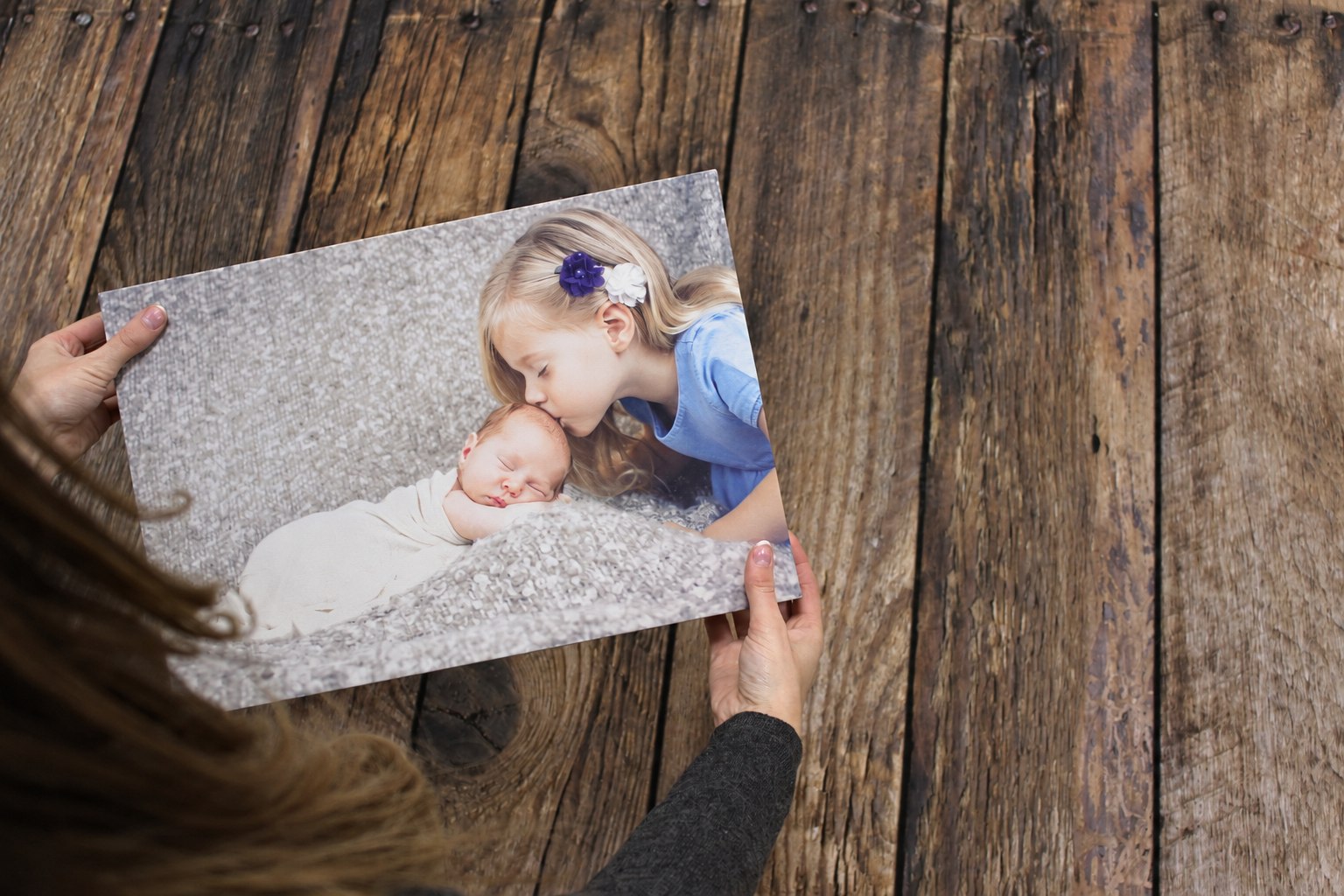
The picture that belongs on your wall may already be somewhere in your phone. A family walk, the dog looking straight at you, a wedding moment nobody posed for or a place you would go back to tomorrow. It does not need to be the most spectacular photograph you own. It needs to be one you want to see again.
When people ask what photos look best on canvas, there are two useful questions inside it. Which picture means enough to print? And how can that particular file, composition and size work together? Start with the first. The second helps you choose a thoughtful way to display it, rather than turn choosing a photograph into a test it has to pass.
We will look at eight kinds of picture, from family photographs and travel views to small everyday memories and original artwork. We will also show how a change of shape can lose people from a photograph, what to check in an older file, and when a gentle edit or a smaller print is more useful than chasing a perfect image.
The eight example images and imagined rooms in this guide are fictional AI-created teaching illustrations. They show choices to consider, not customer photographs or tested physical prints. The close view identified as a real canvas detail is a genuine YI2C photograph. Your own original files and the actual product preview remain the useful references when making your print.
Start with a picture you care about
Think about the pictures you return to without being prompted. You might show somebody the same holiday view, keep an old photograph beside your desk or stop at a familiar face when scrolling. That is a useful shortlist already. A print gives one of those pictures a place in daily life.
Ask what you want to remember. For a family photograph, it could be a gesture between two people rather than everyone’s expression at once. For a landscape, it could be the shape of a walk or the light at the end of a day. Name that part before making a crop, because it is easy to remove the thing that gave the photograph its meaning.
The recipient may see something different from you. A technically polished portrait might be your favourite, while they love a less formal photograph because it feels like the person they know. For a gift, think about the picture they would enjoy living with. The most expensive camera or the most elaborate background does not decide that.
Give a precious imperfect picture a fair hearing. An older photograph may have softness, grain or a limited file. Those qualities affect the size and finish you might choose, but they do not make the memory unworthy of a print. Keep its character in view while looking honestly at what the file contains.
There is also no requirement to choose a photograph. A drawing, a painting, a digital illustration or an artwork you have created can be the right image. Canvas is a way to display an image, not a rule that it must be a portrait, a landscape or an imitation oil painting.
Make a small shortlist, then compare two things separately
Choose perhaps three to six pictures before looking for more. A manageable set makes differences easier to notice. Give each a simple label, then write one line about why you like it. A photograph with a strong personal reason deserves to stay in the conversation even if another file looks cleaner.
First compare meaning and composition. Can you see the part that matters? Is the moment readable without an explanation? Does the picture have space around the people, pet or scene you want to keep? A clear subject can help, but it does not have to mean one isolated object on an empty background.
Then compare the available files. Find the best original, inspect the important detail and consider the intended print size. Do not combine these into one vague judgement of good or bad. A lovely picture might suit a smaller canvas; a larger file might support a bigger display while leaving you less interested in the subject.
| Ask about the picture | Ask about the file and display |
|---|---|
| What would I enjoy remembering? | Have I found the best available original? |
| Which person, detail or part of the scene matters? | Can I inspect that detail at a useful size? |
| Does its shape suit the composition? | What remains after the proposed crop? |
| Would I enjoy seeing it in this room? | How large will it be, and where will I view it from? |
| Would a second picture help tell the story? | Would separate prints or a considered collage work better? |
Editable prompt: Choose between your photographs
Compare a shortlist without losing the personal meaning
Help me compare these photographs as possible prints. I have labelled them [A, B, C] and the personal reason for each is [my notes]. The print is for [person and room], viewed mainly from [position], and I am considering [rough sizes or no size yet]. Compare the emotional subject, composition, useful space and visible distractions separately from the file checks. Do not rank a precious older photograph as worthless because another looks sharper. Suggest two useful candidates and explain the trade-offs. Do not infer original pixel dimensions, certify print quality or invent the occasion from the preview. Ask which part of each photograph I most want to keep before recommending a crop.
One useful refinement: “Give more weight to the gesture between the people and less to the tidiness of the background. Keep the older photograph among the options and suggest a display that suits its limits.”
Use ChatGPT as another pair of eyes, if it helps
You can do the whole selection yourself. If you would like help putting a visual concern into words, open ChatGPT and upload a few photographs you can use. Explain the purpose, label the images in your message and replace the bracketed choices in a prompt below. Begin by asking for observations and a plan, rather than generating a replacement picture.
Use the upload control in your chat, or drag a supported file into the conversation where available. Keep the original safely outside the chat. If you add a room photograph, say that it supplies the broad setting, not measurements. If you add several views from the same occasion, identify the photograph you want discussed instead of leaving the tool to guess.
OpenAI’s Free Tier FAQ explains that free accounts can upload images and create images, with tool limits that can differ from ordinary chat limits. Availability and allowances can change. Check the controls and messages in your own account; you do not need to buy a plan simply to make a photo shortlist by hand.
An AI opinion is a suggestion to examine. Its visual analysis can miss a person, misread a small detail or misunderstand what a moment means. OpenAI’s image-input guidance also explains that images are resized for analysis and original metadata is not processed as part of that view. Check actual pixel dimensions in the file itself. A reassuring answer in a chat is not a print inspection or a colour proof.
If you ask for an edit, keep it as a separate candidate. Save the actual returned image using the tool’s download control, then compare it with the original at a useful size. A screenshot of the conversation is a different file. For a straightforward crop or modest tonal correction, an ordinary editor often gives you more direct control over the recorded photograph.
Editable prompt: Look closely at one photograph
Turn a vague concern into a useful check
Look at this photograph as a possible print for [person or room]. The part that matters to me is [face, gesture, pet, place or detail]. Describe what is visibly clear, what competes with it and what I should enlarge in the original file. Separate a soft background from possible softness in the important subject. Suggest at most three useful checks or modest changes, and include leaving it alone as a serious option. Do not infer metadata, recover detail by description, count people with certainty or approve a print size from the chat preview. If a feature is too small or ambiguous, say so and help me formulate a question for the workshop.
Eight kinds of picture worth considering
These are starting points, rather than categories you have to fit. A wedding photograph can also be an everyday-feeling memory; a landscape can contain the people you love. Look at what each example asks you to notice, then use the same questions with your own pictures.
1. Family photographs with something happening between people
A good family picture can be a formal portrait, but it can also be the moment between portraits. A child leaning towards a parent, somebody laughing or two people walking together can make a picture feel familiar. Everyone looking at the camera is one option, rather than a requirement.
Choose the relationship you want to keep. If the picture is about the whole group, check that the proposed crop includes everyone comfortably. If the small gesture between two people is the subject, a closer composition may make sense. Make that choice deliberately instead of letting a preset shape decide who remains.
Look at faces and hands, then at their place in the frame. A lovely expression very close to an edge can need a different proportion or side treatment. A group spread across a wide photograph may be a poor candidate for a narrow portrait crop, even when the centre looks attractive in isolation.
If you would like to take a new photograph, plan a relaxed family phone photoshoot around something you already enjoy doing together.
An AI-created photographic-style family illustration. The wide group composition makes it useful for comparing a full image with a forced narrow crop; it is not a real customer photograph.
Our imagined parent and two children are spread across a coastal bench. That width is part of the group composition. The format comparison later in the guide uses this same source to show what a forced narrow view can remove.
A busy family scene can still be worth printing. A birthday table, a beach gathering or a room full of people may carry the story precisely because there is a lot happening. Stand back and ask whether you can still find the people or moment that matter. Keep some context when it belongs to the memory.
Editable prompt: Family photographs
Choose a family picture around the people who matter
Help me choose between these family photographs. The print should show [the whole group / the relationship between these people / this particular moment]. Describe expressions, gestures and the space around the important people, while avoiding assumptions about who they are. Compare a full-scene composition with a closer crop and explain what each loses. Keep every person I name inside a whole-group option. Do not assume everyone must look at the camera or that a busy background makes the image unsuitable. Do not generate new faces or claim you have counted everyone reliably. Give me a short edge-and-expression checklist to verify in the actual original before choosing the print shape.
One useful refinement: “Keep the full group as the purpose. Suggest a wider shape and more surrounding space before proposing a crop that removes somebody at the side.”
2. A wedding photograph that feels like your day
The picture you want to live with may be different from the photograph chosen for the album cover. A quiet embrace, a glance during a speech or the walk back from the ceremony can feel more like the day than the grandest posed scene. Begin with the moment you recognise.
Think about how much of the setting belongs in it. The venue, weather, flowers and the people nearby may be part of the story. In another photograph, the couple and their expression may be enough. Compare a whole-scene version with a closer crop before deciding that a cleaner background is automatically better.
Light fabric, dark suits and delicate details deserve a look in the original. Check that the main faces are clear enough for the display you want and that the crop does not awkwardly remove hands, a veil or the edge of an embrace. You do not have to show every detail equally for the picture to work.
An AI-created photographic-style illustration of an imagined wedding moment, showing a clear emotional subject and a quiet background. Not a real couple or photographer commission.
If a photographer supplied the file, check the download and print-use terms. Paying for photography does not automatically transfer the photographer’s copyright. Ask for the file and permission appropriate to your print rather than taking a screenshot from a gallery. The UK Intellectual Property Office’s image guidance explains that distinction.
Our imagined garden portrait keeps the quiet smile between the couple as its subject. For album-to-wall choices, gift ideas and more detailed crop checks, use our wedding-print guide. One photograph can be enough, or several complementary moments can form a small collection. Keep each image large enough in the finished arrangement for the expressions to remain useful.
Editable prompt: Wedding photographs
Find the wedding moment you want to keep seeing
Help us shortlist these wedding photographs for our wall. We care most about [the expression, a gesture, the people or the setting], and the intended display is [room and rough size]. Compare emotional connection, visible face detail, light-and-dark balance and crop space as separate observations. Suggest a full-scene and a closer option where the originals allow it, explaining which parts of the day each retains. Do not invent the location, identify guests or assume the most formal portrait is best. Do not regenerate faces, remove somebody or approve photographer permissions. List what we should inspect in the original download and ask the photographer about before making the final print file.
One useful refinement: “Keep more of the setting because it is part of the memory. Quiet only the edge distraction we identified, and compare the original before deciding that a tighter crop helps.”
3. The expression that makes your pet yours
A pet picture can begin with the look you know immediately. A tilted head, a particular ear, a sleepy expression or the way they sit beside you can matter more than an unusual background. Choose the character before choosing an effect.
For a close portrait, inspect the eyes, muzzle and familiar markings. Our terrier example keeps both folded ears fully inside the picture, with space beside the face. Keep enough space around ears and whiskers where the original allows it. For a whole-body picture, check paws, tail and the ground beneath the animal. A different shape can be kinder to those features than a square crop chosen first.
A running or playing photograph can be right too. Movement is part of some pets’ character. Decide whether the softness tells that story or prevents you seeing the expression you wanted. A sharp, invented replacement face is not a faithful recovery of a familiar animal.
The eyes give this fictional pet portrait its focal point, while space around the ears leaves room to choose a crop. Check those same details in your own original photograph.
Our pet photo printing guide goes deeper into likeness, crop, remembrance pictures and the choice between canvas and a smooth matte poster. Keep that specialist advice beside your shortlist if the image needs a closer decision about fur, ears, paws or an artistic interpretation.
Editable prompt: Pet photographs
Choose the pet photograph that keeps the character
Compare these pet photographs for a personal print. The familiar features I care about are [expression, ear shape, markings, pose or another detail]. Describe which picture shows them most clearly and where motion or background detail helps or distracts. Consider a head portrait and a whole-body option separately, keeping the relevant ears, paws, tail and supporting ground where the source allows it. Do not reconstruct hidden anatomy, invent sharper fur or certify the animal’s identity. If an important area is unclear, tell me to inspect the original. Suggest a useful print shape or a smaller display as options without promising a result from the chat preview.
One useful refinement: “Give the expression and natural markings priority over a tidier background. Keep the original face and suggest a crop that leaves the ears comfortably inside the front.”
4. A place you would happily return to
A travel or landscape print can remind you of being somewhere. It could be a broad coastline, a city street, a woodland path or the view from a familiar walk. The scene does not need to be famous. Your connection may be the reason it belongs on the wall.
Look for the route your eye takes through the picture. In our fictional coast, foreground grasses and a footpath lead towards a broad headland and pale crescent beach, with sea and sky beyond. That relationship gives the wide scene structure. Several points of interest can work together; a landscape does not need one isolated subject to be readable.
Check what a crop would remove. The sky may provide breathing space, while the foreground explains where you were standing. A narrow band from the middle can lose both. Compare the natural image shape before forcing a travel photograph into a square because it is a convenient size.
Foreground, beach and distant headlands give this fictional coastal example several layers of depth. It is an AI-created teaching image, not a customer's photograph or a named place.
Small figures or buildings can be part of the scale rather than the main detail. If you want somebody to recognise a distant person’s face, inspect how much of the original actually records it. Enlarging the whole landscape does not create a closer photograph of that person.
A busy city scene or a richly detailed woodland can be a pleasure to explore. Try looking at the complete picture from your normal viewing distance. If you can find the light, shapes or remembered details that drew you to it, the amount of activity may be part of its appeal.
Editable prompt: Travel and landscape photographs
Choose a landscape for the way you will view it
Help me compare these travel or landscape photographs for [room]. The place matters because [my reason], and I want to notice [the whole view / the light / a path / a particular detail]. Describe the visual route through each scene, the relationship between foreground and distance, and what its natural shape preserves. Include a detailed or busy scene as a valid option rather than assuming simple is always better. Explain what would be lost in [square / portrait / panoramic] crops. Do not identify a real location with certainty, invent detail in distant people or estimate original resolution. Give me questions to check in the actual file and from my normal viewing distance.
One useful refinement: “Retain the foreground path and enough sky to keep the view recognisable. Compare a wider display before removing those parts to fit a square.”
5. Black and white with a reason for being black and white
Monochrome can bring shape, light and texture forward. Architecture, a portrait or an everyday scene can work well when the arrangement of light and dark remains clear without colour. It is a useful choice to compare, rather than an automatic way to make every photograph look more artistic.
Look at areas that colour currently separates. A person’s clothing and the wall behind them may become similar grey tones. A bright flower can lose its place among leaves. In another image, removing a distracting colour may make the subject much easier to see. Judge the actual photograph.
Our fictional concrete courtyard uses repeating pillars, receding lines and diagonal light and shadow as its points of interest. For your own building photograph, check whether a slight straightening helps and what that correction crops away. You can also keep a deliberately angled view when it is part of the composition. A measured architectural record and an expressive wall picture have different aims.
Repeated shapes and strong light-and-dark separation carry this fictional architectural example. Monochrome works best when the underlying photograph has a clear structure to begin with.
Make a separate monochrome version in an ordinary editor and keep the colour original. You can compare them without replacing the recorded scene with a generated interpretation. Our black-and-white print guide develops the tonal and paper-display decisions. If you deliberately choose an illustration or a painting instead, save that as another kind of artwork and check the familiar details.
Editable prompt: Colour or black and white
Decide whether monochrome helps this picture
Look at this photograph and help me decide whether a separate black-and-white version is worth trying. Explain how the main subject currently separates through colour, lightness and contrast. Point out areas that might merge into similar grey tones and features whose colour is part of the memory. Suggest a restrained ordinary-editor test on a copy, with the colour original retained. Do not generate a replacement scene, invent missing detail or claim monochrome will suit every room. Compare what each version would ask the viewer to notice, then give me a short checklist for judging the actual exported versions at the intended viewing distance.
One useful refinement: “Keep the monochrome test gentle. Make the main subject distinguishable from the background without turning every shadow solid black or every light area blank white.”
6. A small detail given enough space to be noticed
A flower, a leaf, a favourite object or a pattern in the natural world can make a personal print without a grand scene around it. A small subject can offer interesting colour and shape, especially when you enjoy looking closely.
Check the part the photograph is asking you to see. Our pale flower has a golden centre, droplets on the petal and leaf, and softer green space beside it. In your own image, the petal edge, centre or a drop of water might lead while the rest falls softly out of focus. Intentional softness around a clear detail is different from having no useful focus anywhere. Decide where you want the viewer’s attention to land.
A generous quiet area can suit the composition, but you do not need to remove every leaf or overlapping stem. Some pictures are about a tangle of texture. Look at their overall pattern from a distance and their small detail close up, then choose the scale that lets you enjoy both.
One flower, a few rain droplets and a quiet background make a small subject easy to read. This fictional example shows the idea; your own garden details can be just as personal.
Think about where the print will be seen. A delicate small subject may invite a closer view beside a desk or in a hallway. A broader shape may read more readily across a large room. Those are choices to test with your actual picture and wall, rather than rules that limit the subject.
Editable prompt: Nature and close details
Find the detail the picture is asking you to see
Help me assess this close-detail photograph for a print. The feature I enjoy is [petal, leaf, texture, object or pattern], and I expect to view it from [position or distance]. Describe where the useful focus appears and how the surrounding softness, overlapping detail and empty space affect the composition. Do not assume all background blur is a fault or that every fine feature must be sharp. Suggest two crop or display approaches using what is actually visible. Do not invent microscopic detail, identify an uncertain species as fact or certify print size. Tell me which small area to inspect in the original before deciding how large to display it.
One useful refinement: “Keep the softness around the subject. Compare a slightly wider crop that gives the important petal edge space, instead of sharpening every part of the photograph.”
7. An ordinary moment you do not want to lose
Some photographs are valuable because nobody planned them. A child’s muddy boots by the door, a familiar kitchen, a game in the garden or somebody asleep in a favourite chair can hold more of your life than a polished portrait. A print can make that ordinary moment visible again.
Our newly imagined garden moment shows a grandparent and child potting a plant together. You can keep context that another kind of photograph might crop away. The clutter on a table may explain the afternoon. A slightly awkward angle can belong to the way the picture was taken. Ask what helps you remember the moment before tidying it into something less familiar.
Older files and scanned photographs need an honest look, with kindness towards the source. Try to find the original digital copy or make a better scan when a physical photograph is available. Keep the best version untouched. If there is only one small or soft picture, consider a modest print rather than treating a large wall canvas as the only worthwhile result.
An AI-created photographic-style illustration of an everyday family memory. It is newly imagined, rather than an archive photograph, restoration example or real customer image.
Restoration and imaginative reconstruction are different choices. You may welcome the removal of a scratch or a gentle tonal correction. Replacing a soft face with a sharper invented one can change the person you wanted to remember. Keep checking the original, and ask the workshop about a particular file before ordering if you need help choosing a sensible size.
One useful refinement: “Keep the familiar room and the imperfect expression. Suggest the least intrusive crop and a modest display before proposing a replacement background or a newly generated face.”
8. Original art, colour or an image you have made yourself
You can choose an artwork because you enjoy its colour, shape or idea. It may be a drawing, a scanned painting, a digital composition or an original image developed with AI. It does not have to imitate a photograph or a hand-painted canvas to become a worthwhile print.
Begin with the finished artwork file where you have one. A screenshot of a drawing inside an app may include the interface or a reduced view. Photographing a physical painting also brings its own light, angle and surface into the image. Look at whether you are recording the complete work in the way you intend.
For a design containing words, inspect the actual letters and their size. A layout can look impressive as a thumbnail while its small text becomes difficult to read in the chosen print. Keep an editable version until the wording and crop are checked, and save a flat export for printing.
Original AI-created botanical artwork, offered as a creative-image example. The visible painterly texture belongs to the image; it is not raised physical paint or a photograph of a handmade original.
Our botanical artwork combines olive leaves, fine seedheads and restrained terracotta flowers on warm ivory. Its painted-looking texture stays part of the printed image. It is separate from the real canvas material beneath it and does not create raised paint. For a fine drawing, smooth paper may also be worth comparing with canvas. Our original-art printing guide develops the file and reproduction choices.
Use artwork you own or have permission to reproduce, with a licence that fits the use. If you want to develop an idea further, our AI artwork guides offer prompts and ways to refine original compositions. This photo-selection guide can help you choose what you want to live with; those specialist guides can take the creative process further.
One useful refinement: “Compare the artwork’s complete composition and readable wording first. Keep the surface treatment restrained and save a clean flat file, rather than using a room mock-up as the print image.”
Choose a shape that keeps the picture you meant to choose
Look at the natural proportions before choosing a size. A wide group or landscape may need its width. A portrait may have useful space above and below. A square can be effective when the subject and surrounding space fit it; it is not a neutral crop that suits every picture equally.
Complete 3:2 source
Forced 2:3 portrait crop
Same fictional example photograph. The right panel shows a narrower view of that same source, with no image edit. It illustrates front composition, not a physical wrap or print-quality test. Open the uncropped source to compare.
The comparison uses the same fictional family image at its full 3:2 landscape shape and through a deliberately forced 2:3 portrait-shaped viewing window. The source photograph remains unchanged; the narrow panel simply shows less of it. Notice which people and surrounding space that view removes. It illustrates front composition, rather than a physical wrap, print-quality test or the exact crop selected in your order. Open the full source to compare.
The narrow viewing window loses parts of the wide scene even though the source file is the same. You can move a crop, but you cannot keep both far edges inside a much narrower front shape without another layout decision. Changing the format, keeping a border or choosing another photograph may be more honest than trying to squeeze everything in.
Try a crop on a copy and inspect every edge. Look for cut-off hands, an ear touching the boundary, a horizon that needs a considered adjustment or the person you intended to include disappearing at the side. Check the complete composition again after correcting a tilt, because a rotation can also reduce the available edge space.
Keep a distinction between a deliberate close portrait and an accidental loss. A close crop can be the right choice when you want an expression. It becomes a different picture from the whole group or scene. Save both if they have different purposes, then choose the one that suits this particular print. Our composition guide takes those layout decisions further.
Editable prompt: The shape of the picture
Plan a crop before choosing the print
Help me plan possible front crops for this photograph. The essential content is [people, pet, place or detail], and I must keep [named features]. Compare the natural image shape with [square / portrait / landscape] options, describing what each would remove. Include keeping a wider format or using a deliberate border where appropriate. Do not invent missing limbs, extend faces or claim a precise crop from an uncertain preview. Do not assume a tighter crop is automatically better. Give me an edge checklist for the original file and remind me to inspect the selected canvas front and side treatment separately in the actual product preview.
Check the front and the sides as separate views
A stretched canvas has a front face and sides. An image wrap continues picture content around those sides, so a face or important word near an edge can be affected. Inspect the actual front area in the preview and keep the important content comfortably within it.
Mirror, White or Colour sides may offer alternatives where available for the selected configuration. A mirrored edge repeats edge content; it does not invent a faithful extension of the original scene. Plain sides can leave the image’s natural boundary clear. Check what your chosen size and finish support rather than assuming every combination has the same options.
Depth changes the amount and presentation of the side area. Use the product preview for your actual choice, with special attention to a pet’s ears, a person at the edge or lettering. Our canvas-edge guide develops the examples and options without making this selection guide repeat every finishing detail.
Imagine seeing it from your usual place in the room
A photograph has a close view and a room view. Fine detail can be a pleasure when you walk up to a print, while the arrangement of larger shapes matters when you see it from a sofa or doorway. Think about both before deciding that a larger print is the answer.
For a family picture, ask whether the people remain the part you notice from your normal seat. A wider scene may keep useful context while making faces smaller within the same outside dimensions. If you want both the whole event and a close expression, two complementary prints may be more useful than one compromise crop.
An AI-created room illustration based on the selected family image. The whole family remains visible; finer image details and proportions can vary. It is not a photograph of a finished print or proof of product quality, exact size or colour.
For a landscape, the broad light, sky and land shapes can provide the room view, with smaller details available when you stand closer. A busy scene can still work when those relationships hold together. The imagined room illustration is a styling aid; it does not certify exact scale, unchanged picture pixels or the colour of a physical print.
The coastal example brings a long view into this imagined dining room. The reference-derived styling illustration can change the crop and fine detail; it is not a printed colour, size or product-quality proof.
Measure the space and make a paper rectangle at the proposed size. Include an optional outer frame or gaps if you are planning a group. Look from the usual seat and through the doorway with the furniture in place. Our canvas and poster size guide helps you compare dimensions, and the sofa-size guide covers that particular setting.
Once the display is chosen, our hanging guide covers practical fitting choices and suitable hardware for the wall.
Check the wall in the light you actually use. A dark photograph can look different on an unusually bright screen from a print in a dim corner. Screens emit light and prints reflect the illumination around them; our screen-versus-print guide explains those checks. A room preview cannot promise an exact physical colour match.
Look at the material without asking it to fix the photograph
Canvas has a real surface. The genuine detail photograph below shows the material, wrapped side and folded corner of an actual YI2C print. The knitted hat is part of the printed photograph, distinct from the canvas weave beneath it. This is a different kind of evidence from our imagined example rooms: our actual work, rather than a generated demonstration of what a print might look like.
A real YI2C canvas, photographed close to the wrapped corner. The canvas surface and folded edge are visible here; the photograph has not been generated or retouched for this guide.
Choose the surface because you enjoy it, with a clear idea of the image you are putting on it. Texture does not turn an out-of-focus face into a sharp one, recover a missing detail or automatically flatter every portrait. It also does not mean photographs must be turned into paintings before printing.
A smooth matte poster is another option, especially when you want to choose your own frame or compare how fine linework and lettering will be presented. Canvas and paper give you different displays to consider. A familiar photograph can belong on either, depending on the image and the finish you prefer.
Our canvas quality guide explains the materials, preparation and finishing behind the product. Keep that decision separate from deciding whether the photograph matters. The right material should support the picture you chose, with the file’s real strengths and limits understood.
Find the best file before making an edit
Look in the phone, camera card or cloud library where the picture was originally saved. If somebody else took it, ask for their original or the appropriate full-size download. A screenshot only records what was displayed on the screen, and forwarded message or social copies may have been reduced or compressed.
Keep that original untouched and work on a copy. If a crop becomes too tight, a filter changes a familiar colour or an experiment goes wrong, you can return to the recorded photograph. Use clear names for the source and chosen edit so a small sharing copy is not mistaken for the print file later.
Enlarge the part that matters in the actual file. Check eyes and faces for a portrait, the muzzle or markings for a pet, or a building and ridge if those are the details you want from a landscape. Look for camera shake, missed focus and obvious smudging or blocks, while keeping intentional soft backgrounds in context.
A large file can still contain a blurred photograph. A smaller file can contain a clearly recorded image that suits a modest print. Pixel count, compression, focus and crop answer different questions. Our photo-quality guide helps you check them, and the original-file sharing guide helps keep the best version when sending it.
If the source is an older paper photograph, look for a better original scan or ask about making one. Do not photograph a small screen showing the photograph and assume that creates more useful information. Keep the best version you have and discuss the intended size when the picture is precious but limited.
Choose a size for this particular file
Use the actual pixel dimensions after the intended crop. Cropping removes part of the available image, so the full source’s dimensions may overstate what is left for the final composition. Check that the file you save is the one you measured, with the crop you intend.
For one way to check, open the file in Photopea and look at Image → Image Size. Read the width and height in pixels, then close the dialogue without applying a change. You are checking what the file contains, rather than increasing the numbers to make it appear more suitable.
A pixels-per-inch calculation can help you compare sizes, but it is not a universal pass mark. Divide the available pixels along an edge by the print dimension in inches. The table uses a separate hypothetical 4032 × 3024-pixel photograph with a 4:3 shape. Those are example file dimensions, not the dimensions of the family illustration or its 3:2-to-2:3 viewing comparison.
| Hypothetical file or crop | Pixels available | Front size | Calculated PPI |
|---|---|---|---|
| Complete 4:3 photograph | 4032 × 3024 | 16 × 12 inches | 252 |
| Centred square crop | 3024 × 3024 | 16 × 16 inches | 189 |
In this example, the centred square removes 504 pixels from each side of the original width. The height stays at 3024 pixels. Both rows are calculations, not print-quality approvals: they cannot establish whether a face is focused, a small detail is clear or the image suits the way it will be viewed. A differently positioned crop would remove different content.
There is no single PPI threshold in this guide that makes every photograph good or bad. A broad scene, a delicate drawing and small lettering can reveal different limitations. A close viewing distance can make fine weaknesses easier to notice. Consider the actual image, the proposed size and the person who will enjoy it together.
A DPI label or the words high resolution do not create detail. Inspect the downloaded file itself and keep a comparison with the source if you try enlargement. An enhancement can add plausible-looking information without faithfully recovering the original scene. Our phone-photo print-size guide takes the calculation and examples further.
Ask us about the file before ordering if you are unsure. Tell us what you want to keep, the approximate size and where it will go. A thoughtful smaller print, a different shape or a second image can be a useful answer. We prepare photographs for print; that is different from promising a full restoration or a rescue for every tiny, blurred file.
Make gentle changes for a clear reason
Name the problem before reaching for a tool. A slight tilt, a bright edge distraction or a photograph that needs a modest tonal correction can have different solutions. Try one change on a copy, then compare the whole picture with the original. A stronger edit is not automatically an improvement.
For a faithful photograph, ordinary crop, exposure and colour controls let you work with the recorded image. Keep natural skin, familiar clothing, pet markings and the light of the occasion in mind. A warmer room scheme is not a reason to make everybody’s skin orange. The photograph can relate to the room through its display instead.
If you use generative editing, save it as an interpretation to inspect. OpenAI’s image-editing guidance notes that edits can extend beyond a selected area. A request to change only the background does not guarantee that a face, hand or familiar feature remains identical. Return to the original when preserving it matters more than the new effect.
When recorded features matter, keep an untouched source in a layered document and place a duplicate containing the original person or pet above the new background. Use an editable mask to hide the old surroundings, checking edges such as hair, fur and clothing yourself. Save the layered document and inspect the export: scaling, cropping and colour adjustments still affect the final presentation, even when you retain the original subject layer.
Editable prompt: A careful edit on a copy
Plan the least intrusive useful edit
Help me plan a modest edit to this photograph. The issue I want to address is [slight tilt / bright edge distraction / exposure concern / colour cast], and the recorded features I want to preserve are [people, clothing, markings or details]. Suggest the least intrusive ordinary-editor approach on a separate copy, with a way to compare before and after. Keep a faithful photograph as the aim, rather than generating new faces or reconstructing missing detail. If a proposed tool would regenerate part of the image, explain that distinction. Do not promise identical pixels, blur recovery or accurate physical colours. Give me a short final check for the actual saved export.
One useful refinement: “Keep the original subject and natural colours. Reduce only the edge distraction we identified, then compare the complete composition before making any further change.”
Know when to leave the original alone
Sometimes you have already found the picture. Its expression is right, its colours belong to the moment and its imperfections do not prevent you enjoying it. You can choose the size, crop and surface without asking the photograph to become something else.
Look again after an edit has stopped feeling new. Did it help you see the person or place, or did it mainly add a dramatic finish? A black-and-white treatment may be attractive while losing a colour that mattered. A cleaner background may remove the evidence of an afternoon you loved.
Keep the original beside any transformed version. You might choose one as a faithful memory and the other as separate creative artwork. There is room for both, provided you know which you are choosing. You do not need an AI improvement, an elaborate scene or perfect technical polish to justify putting a meaningful photograph on the wall.
Editable prompt: When no further edit may help
Give the original a fair comparison
Compare my original photograph with the edited candidate. The reason I love the picture is [my explanation], and I want the print to feel [natural, familiar, lively or another aim]. Describe what the edit changes in expression, context, colours, detail and crop. Include leaving the original alone as a full option, with a sensible display size or shape to consider. Do not assume sharper-looking invented texture is recovered truth, or that a tidier scene is more meaningful. Identify any uncertainty and the features I should inspect myself. Help me choose the version that serves my stated purpose rather than the one with the strongest visible effect.
Give us a brief that says what matters
You do not need technical language to explain the picture you want. Tell us which people or details must stay, whether the whole scene matters and which size or wall you have in mind. If you have tried a crop, say what you liked and what you were worried about losing.
For a file question, send the best available source and the intended dimensions. Tell us if you are comparing two versions or if a particular face, pet feature or small detail is the reason for the print. That is more useful than asking whether an image is high quality without saying how you want to use it.
If you choose a service option that lets us prepare the placement, check what it includes and provide a clear preference. Full restoration, replacing backgrounds or creating new artwork should not be assumed to come with ordinary print preparation. If you want those things, discuss the work before ordering. You can also use the full builder to control the crop yourself.
Editable prompt: A useful workshop brief
Write a clear note for the printing team
Help me write a concise message to the printing team about my photograph. The intended product is [canvas / poster], approximate size is [dimensions], and the essential content is [people or details]. I prefer [whole scene / closer crop / help choosing] and I am concerned about [specific issue]. Mention which attached file is the best original and which is only an example crop or edited candidate. Ask useful questions about the file, placement and selected options without assuming restoration, background replacement or custom artwork is included. Keep the note in my voice and do not claim that an AI preview has approved resolution or colour. Give me a short version I can check before sending.
Choose one picture, a pair or a collage for a reason
One strong image gives a moment room to be noticed. A pair can hold two related views without making either tiny. A collage can bring several people or occasions into one display when each image still has enough space to do its job.
Look at the size of the pictures within the design, rather than only the outside size of the finished print. A large collage can still contain small faces if it holds many photographs. Keep the most important image larger where the layout allows it, and compare the full arrangement before ordering.
Use our collage guide and creator when the story needs several photographs. This selection process still applies to each one: choose the best source, protect the important crop and decide what the viewer should notice. You can also make a small collection with a shared shape or display finish while leaving each photograph’s natural colours intact.
Bring the picture off your phone
When you have chosen, save the finished flat image itself. Keep the source and any editable version as well. Open the export once more to check the crop, colour direction and wording where there is any. A room mock-up or a screenshot of an editor is not a substitute for the actual image you want printed.
Canvas prints start at £14.99 and posters at £5.99, including VAT and standard UK delivery. Check current sizes and prices for the configuration you choose. For several pictures or gifts, read the qualifying 3 for 2 offer and its conditions there; optional upgrades and any applicable delivery supplements are separate.
If a date matters, leave time to look at the file properly. Eligible paid orders with production-ready artwork before 2pm UK time, Monday to Friday, are dispatched for expected next-working-day arrival. Arrival is not guaranteed; bank holidays, image queries and destination exclusions can affect timing. Check the current delivery details before relying on a particular day.
Then upload the picture you have chosen and check the actual preview. We print, stretch and finish canvases in our family-run West Yorkshire workshop. The photograph does not have to win a competition. It needs to be the one you want to come home to.
A few useful questions
What photos look best on canvas?
Start with a picture you want to live with, then check how its subject, file, crop and size work together. Family moments, wedding pictures, pets, landscapes, monochrome scenes and small details can all be useful starting points. A clear point of interest helps you judge the display, but busy scenes and ordinary memories can work too. Keep personal meaning separate from technical checks: a precious older picture may suit a thoughtful smaller print even when a newer photograph contains more detail.
Do I need a professional camera photograph?
No. A useful phone photograph can be a good starting point, and a professional file still needs a sensible crop and display size. Look at the actual original rather than the camera label. Check the detail that matters, the available space around it and the pixels remaining after the proposed crop. A large file that is out of focus is different from a smaller clear one. Choose the image and size together instead of assuming a particular camera guarantees the finished result.
Can I use a photo from my phone?
Yes, with the best available original and a size that suits the picture. Find it in the device or cloud library where it was saved, and avoid substituting a screenshot or a small forwarded preview. Enlarge the important area and inspect the crop before ordering. Keep the source untouched and save edits separately. If you are unsure how large a particular file can sensibly go, use the phone-photo size guide or ask the workshop with the file and intended dimensions.
Is an old or slightly soft photograph worth printing?
It can be. A picture’s meaning is not decided by perfect technical polish. Look for the best original or scan, then choose a size and display that work with the information available. Be honest about softness and inspect the face or detail you care about. A smaller print can be a good way to keep a precious memory visible. Generating sharper-looking features is a different creative choice from faithfully recovering the original, so compare any enhancement carefully and keep the source.
Does everyone have to look at the camera in a family print?
No. A gesture, a conversation or a shared laugh can be the reason the photograph matters. Decide whether the picture is about the whole group or a smaller moment within it. For a group image, check that the chosen format keeps everyone you mean to include. A close crop can also work when it is deliberate. Keep the people and relationship at the centre of the choice rather than treating a formal pose or a tidy background as the only successful option.
Should I choose a landscape, portrait or square canvas?
Choose the shape around the picture and the place it will hang. A wide group or view may need its width; a portrait may need space above and below; a square works when the subject and surrounding area fit it. Try the crop on a copy and inspect every edge. You can change the print format before removing something essential. Check the actual front and side preview too, because canvas side treatments make a separate decision from the shape of the flat file.
Can a busy photograph make a good canvas?
Yes. A family gathering, a city scene or a richly detailed landscape may be enjoyable because there is a lot to explore. Ask whether you can still find the people, light or remembered details that drew you to it. Look at the complete composition from your normal viewing distance and inspect important detail close up. Simplifying a bright edge distraction may help some pictures, while removing all context can weaken others. Judge what the activity contributes to this particular memory.
Are black-and-white pictures always better for canvas?
No. Monochrome can emphasise light, shape and texture, but colour may be part of the memory or the way a subject separates from its surroundings. Make a separate conversion and keep the colour original. Compare whether important areas remain distinct and whether the picture still says what you want. A strong black-and-white image is one useful option, rather than a universal upgrade. The chosen material, crop and viewing position still matter with either version.
Will canvas texture fix blur or make portraits more flattering?
The material gives you a particular surface; it does not faithfully recover missing face detail or guarantee a flattering result for every portrait. Inspect the actual photograph, especially the expression and focus that matter. Intentional softness in a background can be part of a good picture, while a blurred main face presents another question. Choose canvas because you enjoy the display and understand the file’s limits. Compare a smooth matte poster too when the surface or fine detail is part of your decision.
Can ChatGPT tell me whether my photo is good enough to print?
It can help describe visible composition, distractions and questions to check. It can also miss details or give an incorrect interpretation, and its image analysis is not a reliable way to establish the original metadata, precise dimensions or physical printed colour. Check the actual file yourself and treat the answer as guidance to examine. Give the workshop the source and intended size when you need advice about a particular print. An AI opinion does not replace that file-and-use decision.
When is a collage better than one photograph?
A collage can help when several people, moments or views are important together. Check the size of each image within the finished layout, because a large outside dimension can still leave individual faces small. One photograph may be better when a single expression or scene needs space. A pair or small collection is another option when two pictures deserve their own composition. Use the same source, crop and viewing checks for each image, and let the story decide the format.
Should I choose canvas or a poster for my photograph?
Choose the surface and display you prefer for the particular image. Canvas provides a textured, stretched object with a selected depth and side finish. A smooth matte poster gives you a paper print for your own frame and, if wanted, a mount. Fine linework, small wording and the character of the photograph may influence the choice, but no subject is automatically limited to one material. Include the complete outside dimensions when planning the wall and check the product options before ordering.
Useful tools and specialist help
For optional visual feedback, see ChatGPT, its image-input limitations and current Free plan guidance. For a controlled editing route, Photopea’s saving guide explains keeping an editable document and exporting an image. Our AI artwork guides are there if you want a separate creative interpretation.
Keep the final choice simple enough to explain: this is the picture, this is the part I want to keep, and this is the place I want to see it. The practical checks help that photograph become a considered print without losing the reason you chose it.