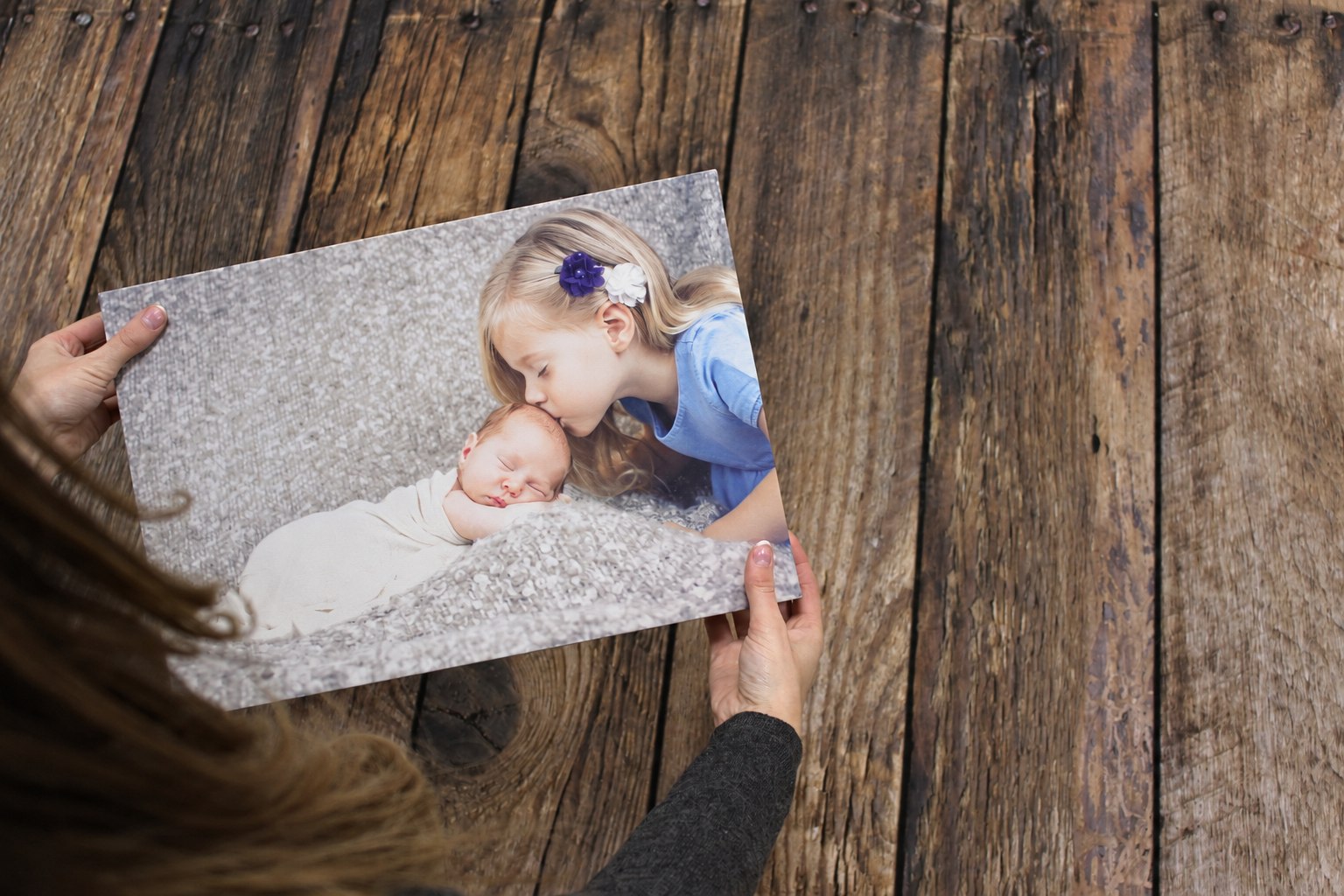
A5, A0, square, panoramic, or a measurement you have written on the back of an envelope: tell us the size you need. We make our own canvas frames in our West Yorkshire workshop, so the familiar sizes are a starting point. They are not the whole story.
Perhaps you want a small photograph for a narrow wall. Perhaps the view from your favourite walk deserves most of the space above the sofa. You might already have a frame that needs an awkward paper size, or a panoramic photograph that looks wrong when squeezed into a standard rectangle. This guide brings the measurements together, with the practical details that matter before we print.
The workshop and product photographs here are ours. They show real prints, timber, corners and work in progress. They are useful for seeing what we make; they are not a set of measured room mock-ups. Use the dimensions in the tables and a template on your own wall to decide what fits.
What canvas print sizes do we make? Our standard range includes A5 to A0, rectangles, squares and panoramas. We also make custom canvas sizes, with a maximum finished front face of 55 inches × 285 cm — 139.7 × 285 cm — in either orientation. Give us your required width and height in millimetres, centimetres or inches, then confirm the crop, depth, finish and complete order price. For unusually large work or a close fit, ask us to check the measurements with you.
Standard canvas and poster sizes in mm, cm and inches
A sizes are useful when you want a familiar format. A4 is easy to picture because it is the size of an ordinary sheet of office paper; A3 gives you roughly twice that area. Keep going and the difference becomes much more noticeable on a wall. The table gives the nominal measurements, with width first and height second in portrait orientation.
Our current sizes and prices page lists A5 to A0 for canvas and posters. A0 may need to be selected or entered through the relevant creator rather than the shorter list of popular shortcuts. Check the current creator and price before ordering. The smaller comparison chart below runs from A5 to A1; the table also includes A0.
The preserved comparison chart shows A5 to A1 at one scale. The table also includes A0. The graphic is not life-size on your screen.
| Size | Millimetres | Centimetres | Approximate inches |
|---|---|---|---|
| A5 | 148 × 210 mm | 14.8 × 21 cm | 5.83 × 8.27 in |
| A4 | 210 × 297 mm | 21 × 29.7 cm | 8.27 × 11.69 in |
| A3 | 297 × 420 mm | 29.7 × 42 cm | 11.69 × 16.54 in |
| A2 | 420 × 594 mm | 42 × 59.4 cm | 16.54 × 23.39 in |
| A1 | 594 × 841 mm | 59.4 × 84.1 cm | 23.39 × 33.11 in |
| A0 | 841 × 1189 mm | 84.1 × 118.9 cm | 33.11 × 46.81 in |
Use the millimetre or centimetre measurements when fitting a particular space or frame. The inch figures above are rounded conversions, rather than different product sizes. An A3 print does not become a 12 × 16-inch print because that sounds close. A few millimetres can matter when paper has to sit neatly inside an existing frame.
The chart compares shapes at one consistent scale. It is not a life-size ruler on your screen: a phone and a large monitor will display it differently. An external frame or mount also changes the complete display size. Those are separate measurements, which we explain further down. For a closer comparison of the familiar middle sizes, see our A4, A3 and A2 poster size guide.
Portrait, landscape and the difference between A sizes
Width comes first, then height. A portrait A3 is 29.7 cm wide and 42 cm high. Rotate the same format to landscape and it becomes 42 cm wide and 29.7 cm high. The material does not change; the way it fits your photograph and wall does.
The A series keeps approximately the same proportions as it grows. Each step is roughly double the area of the previous size: A3 is approximately twice the area of A4, and A2 is approximately twice the area of A3. Neither edge doubles in length. That is why A2 can feel substantially larger than A4 without being twice as wide and twice as tall.
A4 can be a lovely personal print for a small wall or a group. A3 gives a single photograph more presence while remaining manageable. A2, A1 and A0 need more clear space, and give the image more room to be seen from across the room. None is automatically the correct size above a particular piece of furniture. The wall, crop and viewing position still have a say.
Before choosing portrait or landscape, look at the actual picture. A photograph of one person standing can make sense as a tall print. A group spread across a sofa may need a wider format to keep everyone comfortable in the composition. If the useful part of the picture is an unusual shape, a custom size can save you from cutting away something important.
Rectangle, square and panoramic canvas print sizes
Not every photograph belongs in an A size. Many cameras produce a 3:2 or 4:3 image, phones can offer several formats, and a stitched panorama can be much wider again. The shape of the print matters just as much as its overall area. We offer a range of familiar inch-based canvas sizes, as well as custom dimensions.
A close look at real prints from our workshop. Choose their shape around the photograph, then check the dimensions for your wall.
Standard rectangular canvases
These are the standard rectangular formats currently listed on our prices page. The table shows the shorter edge first; choose the orientation that works for your photograph. For example, 16 × 20 inches can become 20 inches wide and 16 inches high when used as a landscape canvas.
| Inches | Centimetres | Millimetres |
|---|---|---|
| 8 × 10 in | 20.32 × 25.4 cm | 203.2 × 254 mm |
| 12 × 16 in | 30.48 × 40.64 cm | 304.8 × 406.4 mm |
| 16 × 20 in | 40.64 × 50.8 cm | 406.4 × 508 mm |
| 25 × 30 in | 63.5 × 76.2 cm | 635 × 762 mm |
| 30 × 40 in | 76.2 × 101.6 cm | 762 × 1016 mm |
Standard square canvases
A square can work particularly well for a close portrait, a pet photograph, a balanced piece of artwork or a collection of equally sized prints. A square does not automatically improve the composition. Check what disappears from the sides of a wide original before committing to it.
| Inches | Centimetres | Millimetres |
|---|---|---|
| 8 × 8 in | 20.32 × 20.32 cm | 203.2 × 203.2 mm |
| 12 × 12 in | 30.48 × 30.48 cm | 304.8 × 304.8 mm |
| 16 × 16 in | 40.64 × 40.64 cm | 406.4 × 406.4 mm |
| 20 × 20 in | 50.8 × 50.8 cm | 508 × 508 mm |
| 24 × 24 in | 60.96 × 60.96 cm | 609.6 × 609.6 mm |
| 30 × 30 in | 76.2 × 76.2 cm | 762 × 762 mm |
| 33 × 33 in | 83.82 × 83.82 cm | 838.2 × 838.2 mm |
| 40 × 40 in | 101.6 × 101.6 cm | 1016 × 1016 mm |
Standard panoramic canvases
For a wide view, the formats below are shown as landscape width × height. The same listed dimensions may appear with the shorter edge first elsewhere on the site. A panorama can also be used vertically: a tall tree, a staircase detail or a narrow architectural photograph might suit that treatment.
| Width × height in inches | Centimetres | Millimetres |
|---|---|---|
| 16 × 9 in | 40.64 × 22.86 cm | 406.4 × 228.6 mm |
| 24 × 10 in | 60.96 × 25.4 cm | 609.6 × 254 mm |
| 30 × 12 in | 76.2 × 30.48 cm | 762 × 304.8 mm |
| 40 × 20 in | 101.6 × 50.8 cm | 1016 × 508 mm |
These tables are the standard canvas range, checked against our current public prices. They are not a promise that every square or panorama is the same price, or that a poster uses the same presets. For the current price and available options, choose the exact size in the appropriate creator or use our full prices page.
Common photo sizes are different from A sizes
It is easy to mix up a photographic format and a paper size, especially when a frame label is written in inches. A4 measures 21 × 29.7 cm. An 8 × 10-inch print measures 20.32 × 25.4 cm. The latter is shorter and a different shape, so they are not interchangeable. A3 and 12 × 16 inches are different too.
| Inches | Centimetres | Millimetres |
|---|---|---|
| 6 × 4 in | 15.24 × 10.16 cm | 152.4 × 101.6 mm |
| 7 × 5 in | 17.78 × 12.7 cm | 177.8 × 127 mm |
| 8 × 10 in | 20.32 × 25.4 cm | 203.2 × 254 mm |
| 12 × 16 in | 30.48 × 40.64 cm | 304.8 × 406.4 mm |
| 16 × 20 in | 40.64 × 50.8 cm | 406.4 × 508 mm |
The 6 × 4 and 7 × 5-inch entries are reference measurements, rather than promises of standard products. Selected smaller named poster sizes are offered separately from the general custom-size range. Choose the exact preset or check the custom form; a familiar name on a frame does not establish what a different product can accept.
To convert inches to centimetres, multiply by 2.54. To convert centimetres to inches, divide by 2.54. There are ten millimetres in a centimetre and 25.4 millimetres in an inch. So a measurement of 325 mm is 32.5 cm, while 12 inches is 304.8 mm.
Keep one unit all the way through your measurement note. “800 wide × 450 high, both in mm” is clear. “80 by 18” leaves us wondering whether one number is centimetres and the other inches. Where a fit matters, keep the original measurement rather than repeatedly rounding between units.
Can I order a custom canvas or poster size?
Yes. This is one of the advantages of making the frames ourselves. We cut the timber for the order in front of us, rather than only choosing a frame from a pile of finished standard sizes. If your photograph needs an unusual proportion, or the space needs something between two common formats, give us the actual measurements.
Cutting the pine for the frame in our own workshop.
You can describe your required size in millimetres, centimetres or inches. For a stretched canvas, tell us the finished front width and height. For a poster, tell us the full paper size that must fit your frame. If an online field uses different units, convert carefully or send us the original measurements so we can check them together.
A request down to the millimetre is useful information, especially when matching an existing display or working within a fixed opening. It does not mean a handmade timber-and-fabric product is a precision engineering part with zero tolerance. Tell us when clearance is critical. We can discuss a sensible finished size and any allowance before the work is made.
Start with the custom-size price form or the canvas creator for a normal custom order. If the size is unusually large, very narrow, intended for a particular recess or needs an optional floating frame, send us the details. We would rather check a few measurements than make something that is technically the size you typed but wrong for the job you had in mind.
What to include with a custom-size request
- Required finished width and height, with the unit written beside both.
- Whether those measurements describe a canvas front, a poster sheet or the maximum outside display size.
- Portrait or landscape orientation, and the depth or finish you would prefer.
- Whether an external floating frame is wanted.
- The original photograph, or its pixel dimensions and a clear description of the crop.
- Any tight wall clearance, access restriction, delivery deadline and destination postcode.
If the picture has people near an edge, say which details must stay on the front. “Please keep both children and the dog fully visible” tells us more than “crop nicely”. If the photograph can determine the final proportions, tell us that too. Keeping a little flexibility in the width or height can produce a much better result.
What is the largest canvas print we make?
Our maximum finished canvas front face is 55 inches × 285 cm, which is 139.7 × 285 cm. In millimetres that is 1397 × 2850 mm; the longer edge is approximately 112.2 inches. The orientation can be reversed.
Those are the measurements across the front of the finished stretched canvas: the shorter side stays within 139.7 cm and the longer side within 285 cm. They are not simply the width of a roll of material. Canvas also has to go around the sides and be secured at the back; we work out those production allowances when preparing the print. Give us the front size you need, rather than adding your own wrapping margin to it.
A large landscape canvas from our workshop archive. Its exact measurements are not recorded in this guide.
There are two useful checks at this scale. First, will the photograph reward being printed that large? Second, will the complete piece work in the room and get there safely? An impressive maximum is only useful if the picture, wall and delivery arrangements suit it.
For a canvas close to the maximum, contact us before placing the order so we can confirm the crop, depth, framing options, current price and delivery arrangements. A large optional outer frame changes the overall display dimensions. Long parcels can also need different handling from a small canvas, and access through doors or around a staircase can become part of the decision. Our extra large canvas guide covers choosing and planning a larger piece in more detail.
Take the route into the room seriously. Measure narrow doorways, turns and stairs; consider the complete packed or framed piece, not only the open patch of wall. A photograph of the intended route can help explain an awkward corner. If the dimensions are close, ask us about the actual finished and packed measurements instead of assuming it can be tilted through.
The current prices page explains oversized delivery supplements. Check the complete quote for your size and destination, including any optional frame or hanging kit. Standard-order delivery wording should not be taken as a promise that every unusual oversized job can be made and delivered to every address on the same timetable.
An unusually tall portrait print in the workshop archive; an example of format, rather than a current size specification.
The large pieces in our workshop archive show the variety of work that has passed through here. Their exact measurements are not recorded in this guide, and the photographs should not be used as a ruler or as a list of current products. For your order, use the confirmed front measurements and the actual quote.
We make the frames. That makes a difference.
A custom canvas size starts before the photograph is stretched. The frame needs to be made for the intended finished piece. In our workshop, solid pine is cut to size, the corners are joined, and the canvas is stretched and finished by hand. The print and the frame are parts of the same job.
Pine frame timber, ready for the sizes being made.
That gives us flexibility over dimensions and proportions. A long view does not have to become a shorter rectangle simply because that is the only ready-made frame on a shelf. Equally, a small change from a standard size can make sense when you are aligning a print with an existing group or fitting a particular part of a room.
It also means there are practical questions to answer. A very large frame needs to be suitable for its span and use. Available depth and outer-frame options can depend on the size. We consider those details with the order, rather than suggesting that every finish is automatically available for every possible combination of numbers.
The printed material and the frame before the canvas is stretched and finished.
In the photograph above, the printed canvas is still loose over the timber. It is a useful reminder that the flat printed sheet and the finished canvas are different things. The material needed for wrapping and fixing sits outside the chosen front face. You order the piece you want on the wall; we prepare the material needed to make it.
If you like seeing how it is done, come inside the workshop. You will find current and archive photographs, the people at the benches and the practical steps between a file arriving and a finished print leaving. We have no need to invent a spotless production room for a photograph. It is a working workshop, and these are the jobs we do in it.
What size canvas or poster suits your room?
Start with the space, then test the picture. Measure the clear wall width and height, and note the furniture, lamps, shelves, switches and doors around it. For a framed poster or a canvas with an external frame, use the complete outside display size when planning the wall.
The most useful size tool is often a piece of paper. Make a template at the proposed dimensions and put it where the picture will hang, using a method suitable for your wall finish. Stand where you normally see the room: beside the door, on the sofa, at the dining table. A size that felt generous in your hands may look small above a broad piece of furniture.
Above a sofa
Look at the relationship between the picture and the sofa, including the clear wall on either side. One wide canvas can give a landscape room to breathe. A pair or trio can spread several photographs across the same wall. Test the full arrangement, including gaps and outer frames, rather than only the width of one print.
There is no need to force every room into a fixed percentage rule. A deliberately small picture can work in a layered room; a wide landscape can be the main feature in a quieter one. A template lets you see the actual choice. Our canvas size above a sofa guide goes further into that particular layout.
Above a bed
Measure the headboard and clear wall, and consider the picture's height as well as its width. Leave comfortable space around the furniture and make sure the chosen position and fixings are suitable for the wall and the complete piece. A calm landscape can work as one central picture; several coordinated images offer another approach.
Above a desk, in a hallway or on a small wall
A smaller portrait canvas can give a compact space a clear focal point. A4 may be enough beside a desk, while A3 makes the same photograph more prominent. Check the things you use every day: a desk lamp, door swing or shelf can make a perfectly good patch of wall less useful than it first appears.
A narrow wall may suit a custom portrait format, but check the crop before deciding. A tall print of a standing person is different from a tightly cropped strip cut out of a family group. Let the subject help choose the proportions. If several sizes fit the wall, choose between them with the picture visible rather than as empty rectangles alone.
Does the canvas size mean the outside measurements?
Yes. The selected size describes the finished outside width and height of the stretched canvas, before any optional external floating frame. An A3 portrait canvas is approximately 29.7 × 42 cm across its front. The wooden stretcher sits inside the wrapped material.
The canvas has depth as well as width and height. You do not add that depth to the selected front width when measuring its wall footprint. A 60 × 40 cm canvas remains a 60 × 40 cm front whether the available stretcher is Slim or Chunky. The deeper version projects further from the wall.
The sides have depth; the size you choose describes the finished width and height across the front.
The wrapped sides affect where the photograph goes. With an image wrap, some of the picture continues around the edges. Other available side treatments can use mirrored image content or plain sides. Review the preview carefully, especially if faces, hands, lettering or a meaningful object are already close to the edge.
A safe margin is about the composition as well as construction. Even if an eye technically stays on the front, it may feel uncomfortably close to the corner. We can help position the photograph, but it is helpful to know what matters to you. A friend at the edge of a wedding group should not disappear because a size was chosen without checking the crop.
Our guide to canvas sides and wraps explains the options in more detail. If the preview makes you unsure, send the original photograph and the size you are considering. We can look at the actual picture with you.
Slim or Chunky canvas: how deep is each one?
Slim and Chunky describe the stretcher-frame depth. For the same selected width and height, they do not create different front sizes. The table gives nominal depths; the creator shows the options available for your chosen order.
A consistent-scale diagram of the front and nominal depths. It explains the measurements rather than acting as an on-screen ruler.
| Option | Nominal depth in inches | Approximate metric depth |
|---|---|---|
| Slim | 0.75 in | 19 mm / 1.9 cm |
| Chunky | 1.75 in | 44 mm / 4.4 cm |
A Slim canvas has a shallower profile. A Chunky canvas gives the wrapped side more presence when you see the picture at an angle. Consider how you move through the room and the finish you like. A narrow hallway and a broad open wall offer different views of the same edge.
If you add a floating frame, it surrounds the stretched canvas and increases the complete display's outside width and height. The gap around the canvas and the outer moulding both contribute. Do not simply add the stretcher depth to each side and assume that gives the frame size.
An outer floating frame adds to the complete display dimensions. Ask for those measurements when clearance matters.
For a close fit, ask for the complete outer dimensions of the chosen frame and canvas combination. For a row of several pieces, use those outside dimensions in the arrangement calculation. Our Slim, Chunky and floating-frame guide compares the presentation choices.
Print size, mount opening and outer frame size
A poster can have several measurements attached to it once it is framed. Mixing them up is a common reason for ordering the wrong sheet. Our posters are supplied as unframed paper prints, ready for your own frame. The full paper, the visible opening and the complete display are separate things.
Our posters are supplied as paper prints, ready for your own frame. Measure the paper space and mount separately.
Print size
This is the complete paper sheet, including any paper hidden behind a mount. An A3 portrait sheet is 29.7 × 42 cm. If you choose a printed border as part of the artwork, that border still sits within the sheet measurements you ordered.
Mount opening
This is the window through the card mount. The print normally extends behind that opening so its edges are covered and it can be secured. The visible picture can therefore be smaller than the paper. Do not order a sheet exactly the window size unless the particular mounting method calls for that and you have checked the arrangement.
Mount outer size
This is the width and height of the complete mount board. It needs to fit the frame's insert space. A mount can have the same outside size as another mount but a different opening, so the board measurements alone do not tell you how much of the photograph will show.
Outer frame size
This is the complete outside width and height of the finished frame, including its moulding. Use it for the space on the wall and for planning a group. A frame sold as “A3” may be describing the paper or mounted insert it holds, not the outer display dimensions.
The worked A3 example separates paper size, mount opening and outside frame. These are teaching measurements, not specifications for a YI2C frame product.
The A3 worked example
Here is the relationship shown in the diagram: the full paper is 29.7 × 42 cm; the mount opening is 28.7 × 41 cm, giving 5 mm of paper overlap behind each edge in this example. The mount's outer size is 40 × 52 cm. A frame face of 2 cm around that mount area produces an illustrative outside size of 44 × 56 cm.
These are teaching measurements, rather than specifications for a YI2C frame product. Actual mount openings, overlap, frame rebates and moulding profiles vary. The useful lesson is to record all the relevant measurements instead of calling the whole arrangement “an A3 frame” and hoping the label settles it.
How to measure a frame for a poster print
Measure the part that holds the paper when choosing the print. Measure the outside of the frame when deciding where it will hang. If you already own the frame, a few careful checks now are easier than trying to make the wrong paper size fit later.
For a frame without a mount
- If possible, remove a correctly fitting paper insert and measure it flat.
- Otherwise, measure the relevant backboard, glass or internal recess where the paper sits, following the frame's construction.
- Record width and height with the unit, keeping any millimetres instead of rounding to a familiar A size.
- Check the frame manufacturer's stated insert size and any needed fitting allowance before ordering.
For a frame with a mount
- Measure the visible opening through which the photograph will show.
- Establish the full paper size needed behind that opening, allowing the overlap required by the actual mount and fixing method.
- Check that the mount and paper fit the frame's insert space.
- Check the crop within the visible window, so the mount does not cover a face, date or important detail.
If a correctly fitting old print is available, its full sheet size is a useful starting point. If the frame is still packaged, read whether its label describes the insert, the opening or the overall dimensions. With a measurement such as 325 mm, enter 32.5 cm in a centimetre field; do not round it to A3.
For current custom-poster dimensions, use the supported range shown by the poster creator. The current general custom range is 5.8 × 8.25 inches minimum and 39 × 60 inches maximum, in either orientation; selected smaller named presets are separate. Check the present form, because a preset and the general custom-size fields can have different rules.
If you are unsure, send us the opening, the full insert size and a photograph of the frame or mount. We can help you work out what to order. Our detailed frame-measuring guide and custom poster preparation guide take those checks further.
How much space do pairs and trios need?
Measure the complete group. Its total width is the sum of the pieces' outside widths plus the gaps between them. If the canvases have external floating frames, use the complete frame widths. If the pictures are arranged in more than one row, calculate the full height in the same way.
For three portrait A3 canvases, each 29.7 cm wide, with two 8 cm gaps, the total width is 29.7 + 29.7 + 29.7 + 8 + 8 = 105.1 cm. The canvases are still individually A3. The 105.1 cm figure describes the whole arrangement, including the gaps. With the tops aligned, the group is 42 cm high.
Now imagine adding an outer frame to each canvas. Even if the picture fronts remain A3, the group becomes wider and taller. That is why it helps to decide on the finish before marking the final positions. Make paper templates for the complete outside shapes and check the gaps from your normal viewing position.
There are two different ideas people call a triptych. One is a set of three separate photographs. The other is one image divided across three canvases. The second needs more planning: important features should not fall awkwardly into a gap or wrap, and the visual spacing changes how the scene reads. Tell us which you mean before preparing the files.
Our pairs, trios and gallery-wall guide has more arrangement ideas. For a new group, choose images that work together in subject, light or colour, then check each crop individually. Equal-sized canvases should not mean a person gets a poor crop just to match the others.
Will a panoramic photograph fit a panoramic canvas?
“Panoramic” covers several shapes. A 2:1 image is twice as wide as it is high. A 3:1 image is much narrower in height for the same width. Both can be panoramic, but they will not fill the same canvas without cropping, added space or a change of proportions.
To check the shape, divide width by height using the same unit. A 6000 × 2000-pixel photograph is 3:1. A 120 × 40 cm canvas is also 3:1, so their front-face proportions match before side treatment is considered. A 120 × 60 cm canvas is 2:1, which asks for a different crop or layout.
Choose a custom front size that respects the useful picture if the standard formats remove too much. This can matter for a ridge line, a shoreline or a family group that stretches from edge to edge. Look at the horizon too: levelling it may trim some height and width, changing the usable dimensions.
Phone panoramas need an extra check for stitching. Zoom into buildings, railings, moving people and repeated objects before ordering. A join that was easy to miss on a phone can become very visible on a large canvas. More pixels across the file do not repair a doubled person or a broken line where two frames were joined.
Do not stretch the image sideways just to make it fill the chosen size. People, circles and buildings will change shape. A considered crop, a different canvas proportion or an appropriate side treatment is usually a more useful decision. If you want the entire original image visible on the front, say so when asking us to check it.
Will my photograph work at the size I choose?
The answer depends on the original detail, focus, crop and viewing distance. File size in megabytes is only part of the story. A heavily compressed file can be large after editing without gaining useful detail; a clean original can sometimes be smaller on disk and still print better.
Use the highest-quality original you have. Look for the camera file, the photographer's full-resolution download or the original image in your phone library. Screenshots, social-media saves and compressed messaging copies can discard information before you start. If someone else has the original, ask for that file rather than another screenshot of the picture.
Work out the pixels after the crop
A simple estimate is the pixels along an edge divided by that edge's proposed size in inches. A 4000-pixel-wide image printed 20 inches wide gives 200 pixels per inch before cropping. Print it 40 inches wide and the same file gives 100 pixels per inch. The calculation describes pixel density; it does not guarantee how sharp the subject was when photographed.
If a crop reduces the usable width from 4000 to 2800 pixels, use 2800 in the calculation. Do not use the original dimensions for a heavily cropped portrait cut out of a wide group photograph. The face that matters may occupy only a small part of the original file.
There is no single useful PPI promise for every canvas
A detailed photograph inspected at arm's length asks different things of the file from a large landscape normally viewed from across a room. Canvas texture, image content, sharpness and your expectations matter too. We would rather look at the actual file and intended size than tell everyone that one number is either compulsory or a guarantee.
Changing a DPI label from 72 to 300 without resampling does not create missing picture detail. Resampling adds pixels, and AI tools can invent plausible texture, but neither can establish what an unreadable face or sign originally looked like. Keep an untouched original and show us any edited version you are considering.
Exporting artwork for your chosen size
For artwork you have created yourself, set the intended front proportions before the final export. Export the finished image at the largest useful native dimensions your tool supports, avoiding a small web thumbnail. Check text, dates, names, fine lines and gradients at a useful zoom. If the design includes a border, make sure it is deliberate and evenly placed in the print area.
Do not add a guessed canvas wrap around the artwork unless we have agreed the production layout with you. Supply the complete intended picture and tell us whether it must stay fully on the front. We can then discuss the crop and sides without mistaking a homemade wrapping margin for part of the composition.
YI2C checks the file, crop and selected size before production. If you would like help, send the original and tell us the size you have in mind. Our photo quality guide explains what we look for, while our phone-photo enlargement guide deals with choosing a sensible larger print.
Three useful messages you can copy and send us
You do not need to know printing terminology to ask for a size. The messages below help us understand the job without a long exchange about which measurement means what. Replace the square brackets, leave out anything irrelevant, and send it through our contact page with the original photograph where possible.
Editable enquiry: Enquiry 1 — a custom canvas for a particular space
Enquiry 1 — a custom canvas for a particular space
Hi YI2C. I would like a canvas with a finished front width of [width and unit] and height of [height and unit], in [portrait/landscape] orientation. These are [my required canvas front measurements/the maximum space available — please advise]. I would prefer [Slim/Chunky/your recommendation] and [with/without/undecided about] a floating frame. Please keep [people, faces or important details] fully on the front. My original image is [attached/link/file dimensions]. The clear wall space is [width × height], delivery is to [postcode], and I need it by [date, if relevant]. Please confirm the suitable size, complete outside dimensions if framed, full price and delivery arrangements before I order.
Editable enquiry: Enquiry 2 — a poster for an existing frame
Enquiry 2 — a poster for an existing frame
Hi YI2C. I already have a frame and need the correct paper print for it. The full paper/insert space measures [width × height and unit]. The mount opening measures [width × height and unit, or no mount]. The old correctly fitting print measures [full paper size, if available]. I have attached a photograph of the frame/mount and my original image. Please help me check the full sheet size, the overlap behind the mount and the visible crop. I want [details/text/faces] to remain visible. Please confirm the size and price I should order rather than assuming the frame's outside measurements are the paper size.
Editable enquiry: Enquiry 3 — a large panorama or a size near the maximum
Enquiry 3 — a large panorama or a size near the maximum
Hi YI2C. I am considering a [width × height and unit] finished-front canvas of [describe image]. The original file is [pixel dimensions and file source], and [the entire image must remain on the front/a crop is acceptable around these areas]. I would like advice on depth and [optional floating frame/no outer frame]. Delivery is to [postcode]; the route into the room includes [door/stair/turn measurements or no known restrictions]. The wall space is [measurements] and my preferred date is [date]. Please check image suitability, supported finished size, any overall or packed dimensions I need to allow for, and the complete price including oversized delivery.
For an unusually shaped space, add a simple labelled sketch. Mark what is fixed, what can move and whether your measurement leaves any clearance. A quick photograph with a clear note can be more useful than a perfectly drawn plan without units.
The final size check before you order
Once you have a likely size, look at the whole order rather than only the front measurement. This is the point to check the final crop, side treatment, frame and delivery details together. A small correction now is easy; the same correction after a canvas has been made becomes a different job.
- Confirm width × height and units. Read them aloud with the orientation: “800 mm wide, 450 mm high, landscape”.
- Confirm what they measure. Canvas front, full poster sheet, mount opening and outside frame are different measurements.
- Test the wall space. Include outer frames, gaps and clearance around furniture, doors and everyday objects.
- Check the original file and crop. Keep every important person, pet, date and detail where it belongs.
- Choose depth and sides. Confirm which part of the photograph stays on the front and what happens around the edges.
- Read the complete price. Check optional frames, hanging kits and any oversized delivery charge for the actual order.
- Check timing and access. For a gift deadline or large piece, confirm the relevant delivery details and the route into the room.
A real canvas on the packing bench, with its wrapped edge visible.
For everyday orders, the creator lets you choose your size and finish, upload the image and review the layout. A desktop or laptop gives you more room to inspect a detailed crop. If you would rather leave the positioning to us, tell us what matters in the photograph and use the available studio-help route. You do not have to become an expert in canvas wrapping to get a good print.
For delivery, check our current delivery page. The ordinary same-day dispatch cut-off depends on ordering and paying before 2pm UK time, Monday to Friday, with artwork ready for production. Expected next-working-day arrival is not a guarantee for every order or destination, and a custom enquiry that still needs approving is not yet artwork ready to print.
We make the print, the pine frame and the finished canvas here. That gives us the chance to look at the details together. If a standard size suits the photograph, choose it. If something a little different will make the picture work properly, tell us the measurements. We would love to make it for you.
Quick answers about canvas, poster and frame sizes
Is A3 bigger than A4?
Yes. A3 is 29.7 × 42 cm and A4 is 21 × 29.7 cm in portrait orientation. A3 has approximately twice the area of A4; its width and height do not both double.
Is A2 bigger than A3?
Yes. A2 is 42 × 59.4 cm, compared with A3 at 29.7 × 42 cm. A2 has approximately twice A3's area and needs substantially more wall space.
Is an A4 print the same size as 8 × 10 inches?
No. A4 is 21 × 29.7 cm. An 8 × 10-inch print is 20.32 × 25.4 cm, so the dimensions and proportions differ. Use the frame's actual required paper size.
Is A3 the same as 12 × 16 inches?
No. A3 is 29.7 × 42 cm, while 12 × 16 inches is 30.48 × 40.64 cm. A print made for one will not automatically fit a frame intended for the other.
Does a canvas need extra width for the wrapped sides?
The size you select already describes the finished stretched canvas's outside front width and height. We allow for the material needed around the sides and back. Check the crop and side treatment rather than adding a guessed margin to your order dimensions.
Does Chunky canvas have a larger front than Slim canvas?
For the same selected width and height, the front dimensions stay the same. The nominal stretcher depth changes: Slim is approximately 19 mm and Chunky approximately 44 mm. Check the options available for your chosen size.
Should I order a poster using my frame's outside dimensions?
No. Use the required paper size inside the frame, allowing for the actual mount and fitting method. The outside dimensions include the moulding and are useful for planning the display on the wall.
Should the print be exactly the size of the mount opening?
The paper generally needs to extend behind the opening so the edges are covered and it can be secured. Establish the full sheet size and overlap needed for your particular mount and frame, then check the visible crop.
Are YI2C posters supplied framed?
No. Our poster product is the printed paper sheet, ready for your own frame. Check the sheet measurements against your frame's insert space before ordering.
How can I check the size before ordering?
Make a paper template at the actual dimensions and test it in place. Include any external frame and the gaps between multiple pieces. View it from your normal position in the room, then check the photograph's crop at that shape.
Can I request a canvas size in millimetres?
Yes. Send the required finished front width and height in millimetres, centimetres or inches. We make our own frames, so custom proportions are possible within the supported range. For a close fit, tell us the clearance and confirm the finished measurements and practical tolerances before ordering.
What is your maximum finished canvas size?
The maximum finished front face is 55 inches × 285 cm, or 139.7 × 285 cm, in either orientation. That is 1397 × 2850 mm. Contact us for a size near the maximum so we can confirm the image, depth, optional framing, access, complete price and delivery arrangements for the job.
If you have the photograph and the measurements, we can help with the rest. Compare the current sizes and prices, explore our canvas prints or send us your custom-size question.