
The statement piece · Hallway wall art
One image can be enough.
A powerful photograph, a considered frame and a wall with room to breathe. Sometimes that is everything an entrance needs.
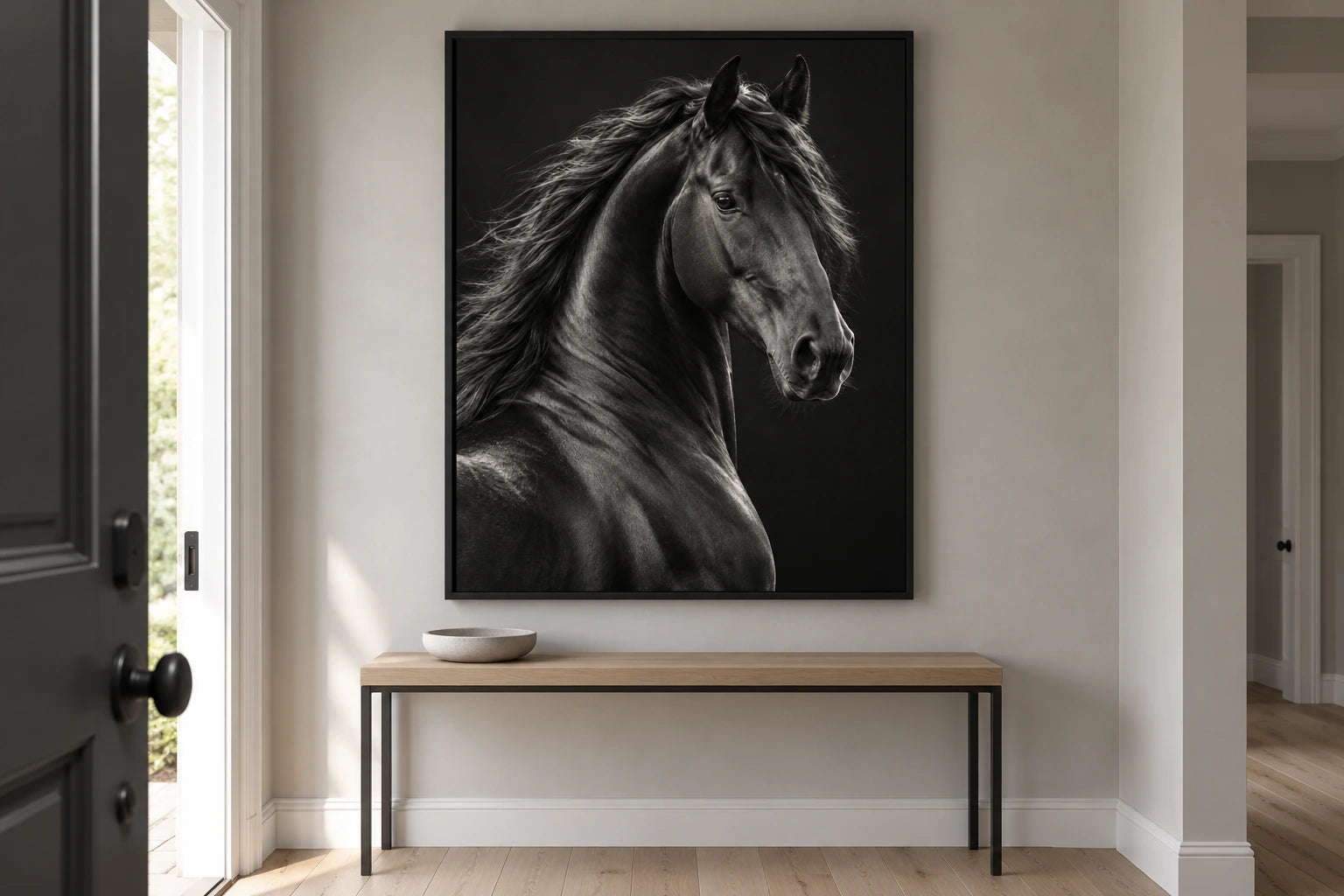
A complete thought on one wall.
You open the front door. Before you have put down your keys, there it is: one photograph, large enough to feel intentional, with nothing around it fighting for attention. The hallway has a centre of gravity. You know where to look.
That is the pleasure of a statement piece. It gives a space a clear identity through one image you actually want to live with. A collection can tell a lovely story, but a single print can make an equally complete one.
For this hallway, we have chosen a dark horse portrait on a framed canvas. Later, we swap it for a huge coastal wave while keeping the room and presentation consistent. The comparison shows how much the subject itself can change the feeling of a home.
Original AI-created photographic artwork and interior visualisations illustrate the idea. The rooms and frame close-up are styling examples, rather than customer homes or photographs of an actual YI2C product.
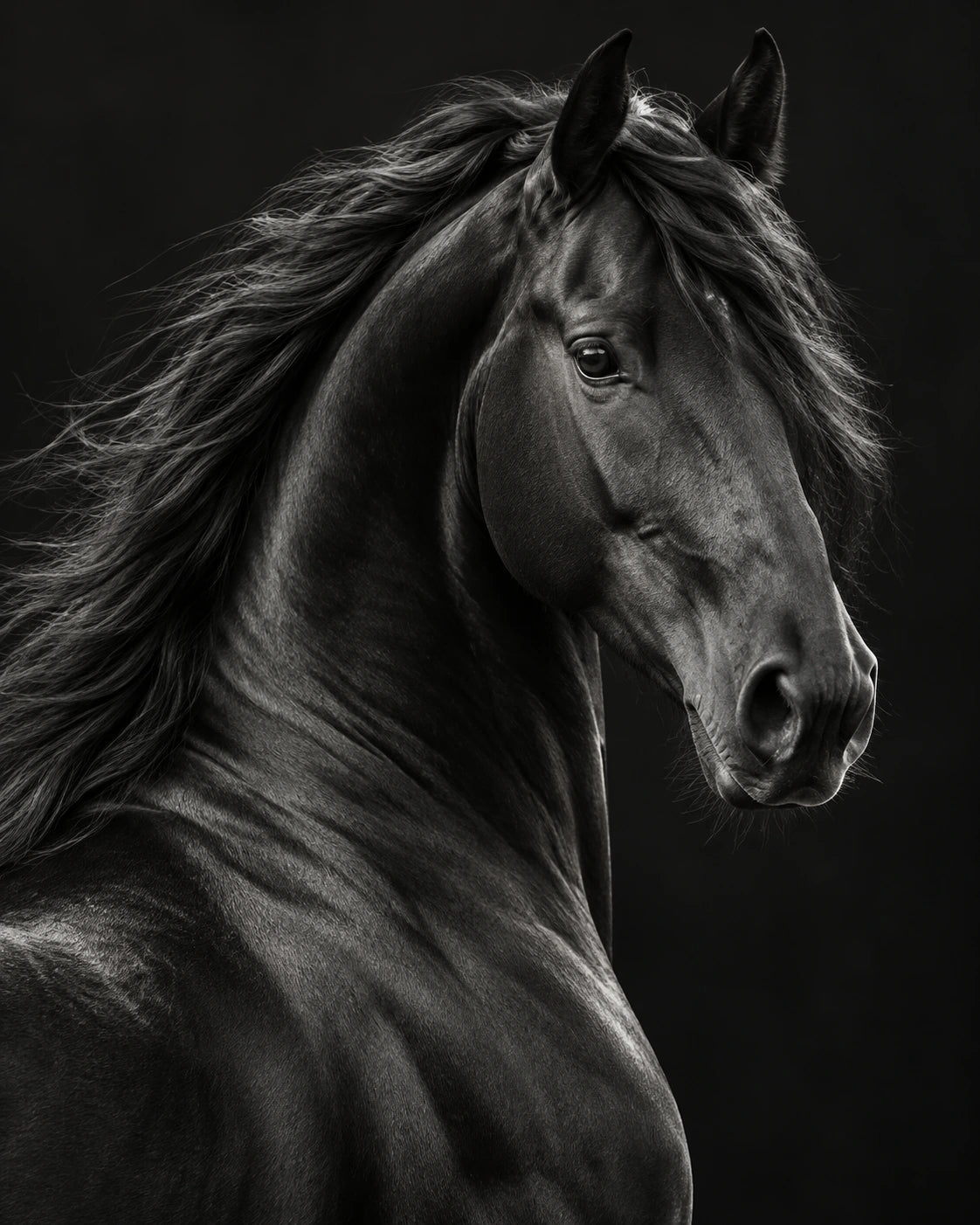
The dark horse
A presence you feel from the doorway.
The horse works because you can read it quickly. A bright eye, the curve of the neck and the sweep of the mane emerge from a dark background. Even from the entrance, the main shape is clear. Move closer and the individual hairs, soft highlights and expression give you something else to enjoy.
There is strength here, but also stillness. The head fills the picture without a busy scene behind it. On a pale wall, the dark print becomes a deliberate anchor; the black floating frame gives its boundary a clean outline.
It is the relationship between image and room that makes the statement. The wall is quiet, the console is simple and the objects beneath are modest. You do not need to repeat the horse elsewhere, add equestrian accessories or build a theme around it. Let the photograph carry its own character.
Your own version might be a portrait of a much-loved animal, a person, a tree or a landscape. Look for a subject you respond to, a composition you can recognise from a few steps away and enough detail to reward a closer look.
The entrance
Choose the wall you meet first.
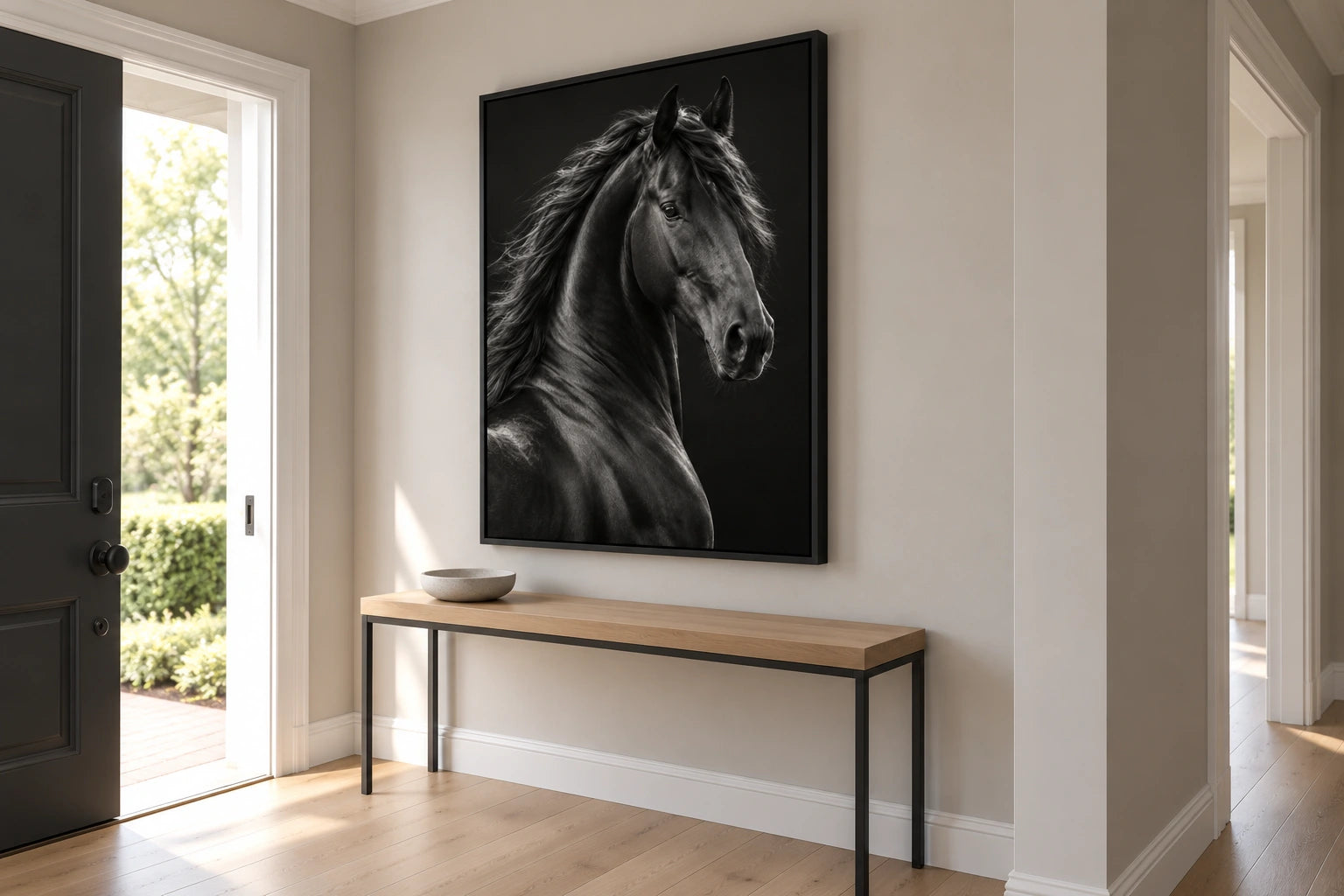
A hallway is a useful place for one substantial print because you encounter it every time you come home. The wall opposite the entrance can offer a clear view; a wall at the end of a corridor can draw your eye through the space. Try both sightlines before deciding.
Stand where you actually enter, then walk past the proposed position. Check what the open door hides, where daylight falls and how the frame looks from the side. A canvas that feels right straight on should also sit comfortably along the route through the hall.
A narrow console can help connect the picture to the space beneath it. Leave a visible gap and keep the surface uncluttered. If you have a small hallway, the clearest wall may work better without furniture below at all. Allow for the frame's projection as well as its front-facing dimensions.
One room · Two moods
Same hallway. A different feeling.
Here, the wall, console, light and black frame stay consistent. The horse becomes a coastal wave. Look at what changes before you think about which one you prefer.

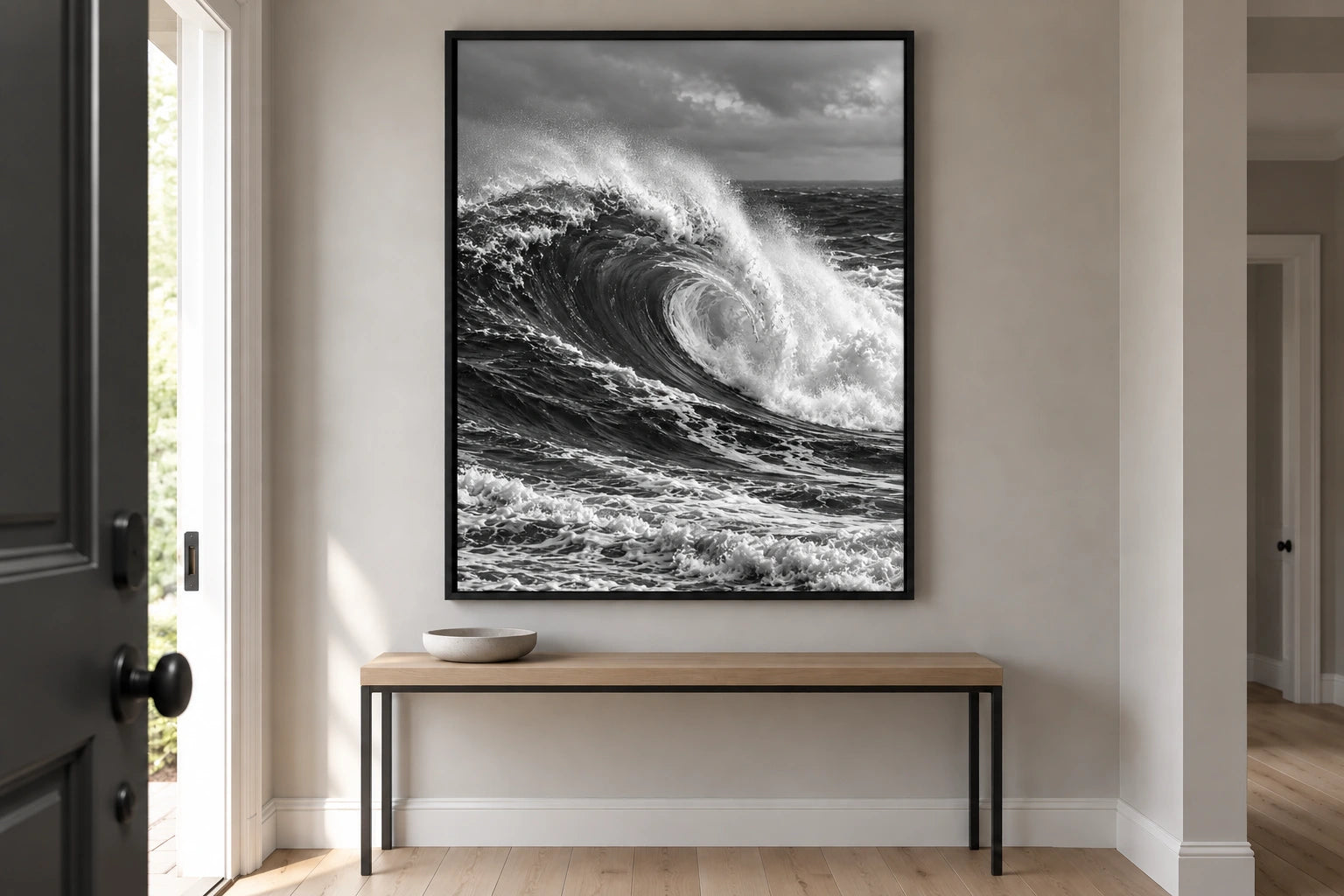
The horse feels concentrated and personal. Its dark background gives the pale wall a strong point of contrast, while the eye invites a more intimate kind of attention. The wave brings a brighter, more restless energy: white spray, a curling arc and water moving across the composition.
Both are monochrome. Both occupy the same place. Yet one suggests a commanding presence and the other an encounter with the elements. That difference is why choosing wall art by colour alone can miss the most interesting part.
Think about the feeling you want as you arrive home. A quieter portrait may give you a moment to pause. A dramatic coast might remind you of a place or an experience you love. Choose the image you would still want to look at on an ordinary Tuesday.
Scale and breathing room
Give it scale. Give it space.
A statement piece needs to feel settled on its wall. Bigger can help, but the largest size available is not automatically the right one. Consider the clear wall area, the ceiling, door openings, switches and any furniture nearby. The picture should have enough surrounding space for its outline to remain distinct.
Test the proposed outer dimensions with a paper rectangle attached using a method suitable for your wall finish. Include the frame, rather than marking only the printed face. Look from the entrance and from the places where you regularly pause. If it feels crowded, reduce the size; if it disappears above the console, try a larger outline.
Choose the shape with the image in mind. This horse and wave both use a tall composition. A broad landscape may need a wider wall. Check the crop before committing so a face, ear or important crest remains part of the visible front.
Position the print for the way you see the room. In a hallway, most viewing happens while standing or walking; above a sofa, the seated view matters too. Avoid treating a single hanging height or furniture-width percentage as a rule for every home. Balance is something you can assess in your actual space.
The framed canvas
The edge is part of the picture.
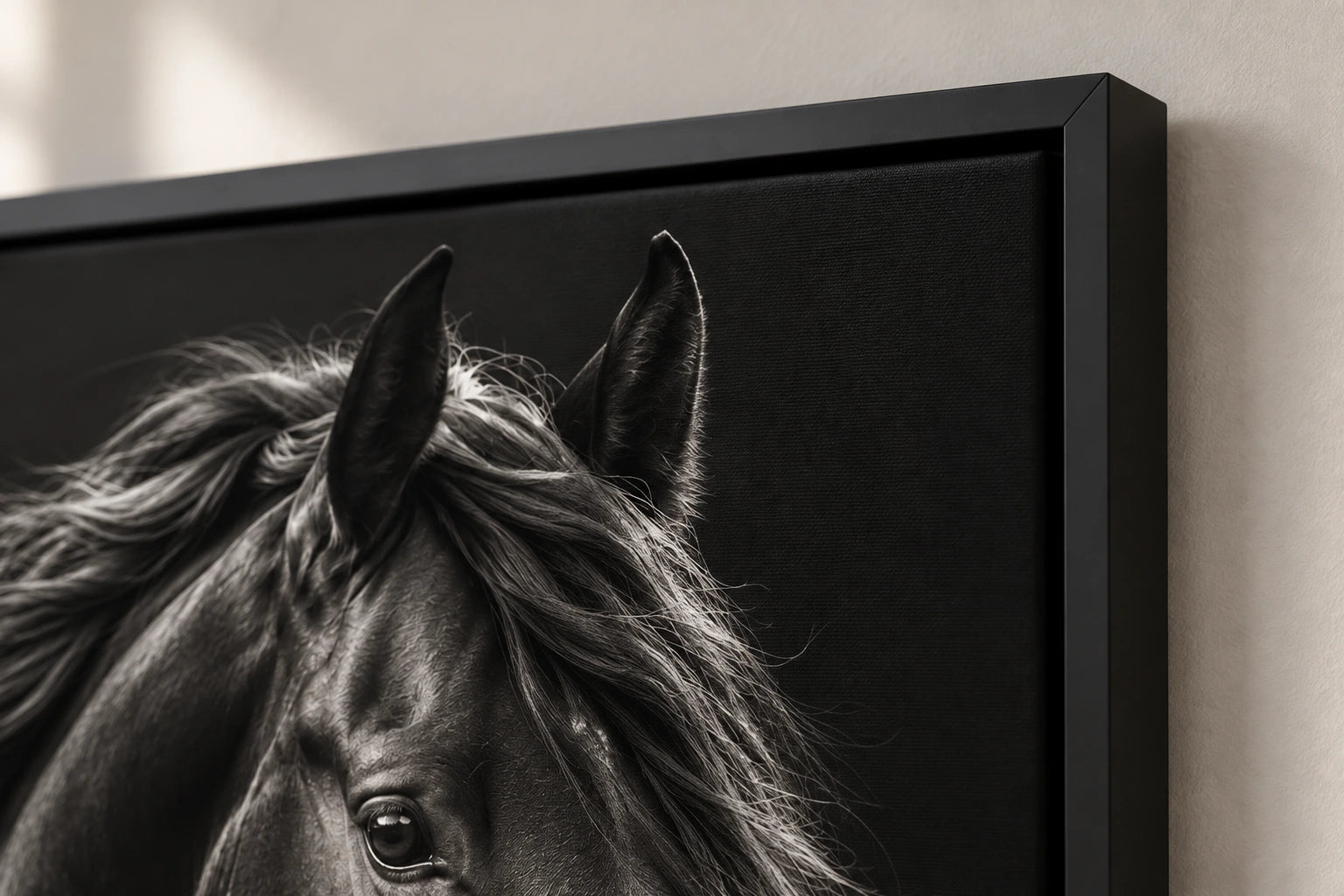
From the entrance you notice the image. As you walk past, the depth and outer edge become part of the impression. A slim black floating frame gives these examples a defined outline and a narrow shadow around the canvas, without a white mount interrupting the dark image.
A stretched canvas already has a physical presence. An outer floating frame adds another boundary; it is an optional finish, rather than something every canvas needs. Pick the treatment that supports the photograph and suits the room.
YI2C canvas prints are stretched over a solid pine frame. The creator shows the sizes and finishing options currently available, including optional outer frames where offered. Check the selected combination and total there before ordering.
The close-up here is a styling illustration of the frame idea. Use the product pages and current finish guide to judge the actual construction and options. Look at the edge treatment as carefully as the front: important image details should remain where you want to see them.
Your own photograph
Choose something you want to come home to.
Powerful wall art can come from a photograph you have already taken. A pet portrait, a coastal walk, a quiet family moment or one remarkable tree may mean more to you than a picture chosen simply because it looks expensive. Colour can make a statement too; monochrome is the direction of this particular hallway, rather than a requirement.
You can also work with an original artwork you have created or are entitled to print. What matters is the connection you feel and how well the composition suits its position.
Use the best original file you have, and check its quality at the proposed print size. Enlarging a small or blurred image will not restore missing detail. The examples on this page demonstrate an interior idea; they do not establish how large every source file can be printed.
You do not have to finish every wall at once. Choose the one place that would benefit from a focal point, give that image room and live with it. A home can feel considered through one decision made well.
Find the image. Let it hold the wall.
Start with a photograph that matters to you, then choose the size and finish that let it belong in your space.
Original AI-created photographic artwork and interior visualisations illustrate the idea. The rooms and frame close-up are styling examples, rather than customer homes or photographs of an actual YI2C product. Source files and styled views are supplied as separate assets. Check image quality and available finishes for your chosen print size.