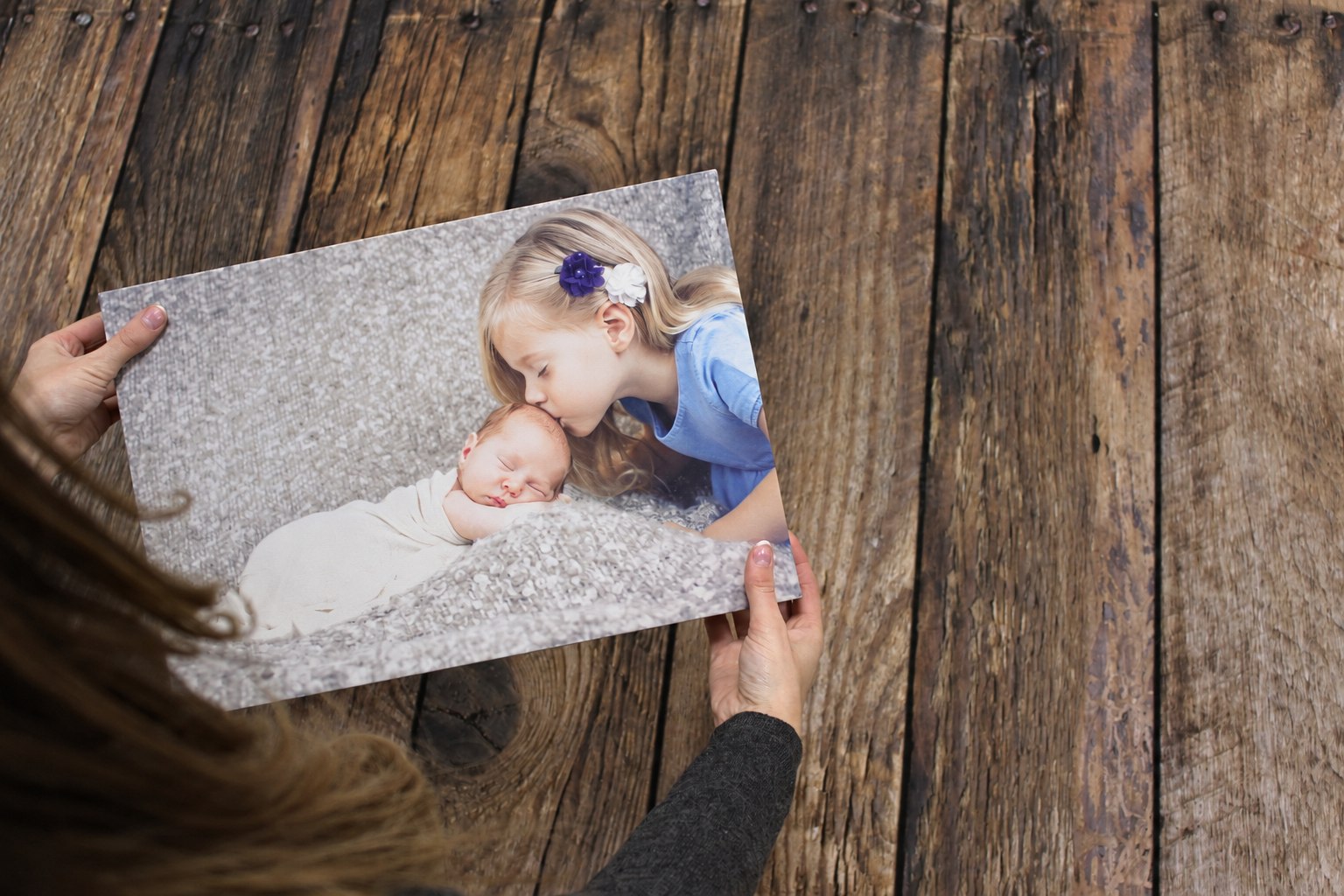
A good-quality canvas print starts with a suitable photograph and depends on the whole finished object: the printed tones, canvas surface, frame, tension, corners, crop and finishing. Price, fabric weight and printer specifications can help you compare products, but none is a complete quality score on its own.
If you are comparing canvas prints in the UK, ask which differences matter for your picture and how they can be checked. This buyer’s guide explains the useful evidence, shows examples of published specifications and sets out when Your Image 2 Canvas is a sensible choice.
What does “quality canvas” actually mean?
For a family portrait, it may mean recognisable faces, natural skin tones and a crop that keeps the important people together. For a pet photograph, it may mean enough detail in the eyes and dark fur to retain the animal’s character. A landscape may rely on gentle tonal changes and a composition that still works at the chosen size.
The physical object matters too. A photograph that looks good on screen can lose impact if the stretching is uneven, the corners are untidy or a face disappears around the sides. Look at the front, edges and back when you have a real print to inspect.
Look for clear information about the fabric, frame, printing and finishing, then check whether they suit your picture. Our materials and finishing page describes YI2C’s current construction; this guide explains how to use those details in a purchase decision.
The original photograph still controls the available detail
A printer cannot reveal information that the supplied file never recorded. Focus, movement, compression and the crop all affect the result. A smaller sharp canvas can be a better choice than a much larger print made from an unsuitable copy.
Use the original file, then inspect the detail that matters. In a portrait, check the eyes and facial features. In an architectural image, look at the lines and small patterns. Do not judge only by a thumbnail or a file size in megabytes.
Image PPI measures pixels available per printed inch; printer DPI describes dots produced by the device. A printer’s maximum resolution does not make a small image contain thousands of additional genuine details. Our photo-size guide explains the calculation and the role of the crop.
AI can create a larger or more polished-looking file, but added details need checking. A face or distinctive pet marking can change. See how to review AI sharpening without losing likeness before choosing an enhancement simply because it looks sharper at first glance.
Canvas weight is useful information, not a verdict
Gsm means grams per square metre. It describes the material’s mass for a given area. It does not, by itself, tell you how accurately the photograph will be reproduced, whether the surface suits the ink system or how carefully the print will be stretched.
A heavier material can have different handling and construction properties. The weave, fibre blend, coating and production method also matter. Comparing one number while ignoring those factors is not enough to decide that every heavier canvas produces a better photograph.
YI2C currently specifies 230gsm poly-cotton canvas. CEWE’s published canvas product specifies 340gsm poly-cotton. The weights are different; that difference is a factual comparison. It does not establish a physical print-quality winner without examining equivalent finished samples.
Ask about the actual material and how it is used. If a supplier says “canvas” without giving more detail, request clarification. If the material description has changed, the current production specification is the useful one to check before ordering.
Compare published specifications fairly
The following examples were checked on 9 October 2026. They compare published product information, not samples ordered and tested side by side.
| Feature | YI2C | CEWE canvas |
|---|---|---|
| Published fabric | 230gsm poly-cotton. | 340gsm poly-cotton. |
| Published construction | Solid pine; hand-stretched and finished in West Yorkshire. | Pinewood; 2cm frame, increasing to 4cm above the stated large-size threshold. |
| Published printing information | Epson SC-P20000. | 12-colour process advertised. |
| Side and depth choices | Slim or Chunky and supported side treatments shown in the creator. | Image wrap and product-specific frame options described on the product page. |
The purpose is to identify questions for your order. Check the exact size and selected options on both services. A difference in an advertised specification may change appearance or handling without answering every question about the photograph.
If a feature matters to you but is not listed, ask the supplier before ordering. Published specifications help narrow the choice; seeing comparable finished prints gives you more information about surface, colour and construction.
Look for tonal detail and sensible colour
A vivid image is not automatically a better image. In a dark-haired dog, useful detail may be the difference between the muzzle, eyes and surrounding fur. In a wedding picture, it may be texture in a pale outfit as well as detail in a dark suit. Very heavy contrast can hide those distinctions.
Inspect important features for artificial halos, coarse sharpening or strange smoothness. Some of those problems originate in the supplied file rather than the printing. Changing to a larger size can make them easier to see.
A screen emits light and a print reflects it, so an exact match to every display cannot be promised. The brightness of your screen and the light where you hang the print affect the comparison. Keep the original file and make any edits deliberately instead of increasing saturation as a default fix.
Real photographs of a supplier’s finished work can show useful surface and construction details. They still have their own lighting and camera settings, so they are evidence of the object rather than a precise colour proof for your photograph.

The frame and finishing are part of the print
Depth changes how far the canvas projects from the wall. It can create a lighter profile or a more substantial presence. It does not automatically change the care applied to the picture.
YI2C’s current options are Slim at 0.75 inches and Chunky at 1.75 inches where supported. The price page currently lists both at the same base price; check the creator for the choices available with your dimensions. Floating frames and hanging accessories are separate options.
When looking at an actual canvas, inspect the tension and whether the frame and print sit properly. Check the folded corners and the appearance of the sides. Do not press or rub the printed surface merely to test it. A supplier’s care information should guide handling.
If you want a smooth paper print inside a frame, a photo poster may suit your preference better. Choosing a canvas because it sounds more premium is less useful than selecting the surface you want to live with.
Protect the composition at the edges
An image wrap continues the photograph around the sides of the stretcher. That can suit an open landscape and create a problem when a face, pet’s ear or lettering is near an edge. The picture’s placement on the front is part of the quality decision.
Mirror sides use reflected edge content; plain white or coloured sides give another appearance. The right choice depends on the photograph. Check the current preview rather than apply one finish to every picture.
Read our wrap and side-treatment guide. If an image is tightly cropped, changing the print shape can help. AI background extension is another possible approach, but its result needs inspection and the actual side allowance must be confirmed.
Compare the total value
Value starts with what you receive: the size, canvas material, frame, finish and the care taken with the picture. Compare equivalent products and the delivered total, including any optional extras you actually choose.
Our approach is straightforward everyday pricing for the materials and service we provide, with free standard delivery and a genuine 3 for 2 saving on qualifying prints. Compare the complete print and service at the size you want, rather than choosing by a headline discount.
At the prices checked on 9 October 2026, YI2C lists an A5 canvas at £14.99, A4 at £19.99 and A3 at £27.99, including VAT and standard UK delivery. Use the current prices for the format you want and check any extras or supplements.
Our canvas-price comparison guide explains how to evaluate an offer without relying on a headline discount.
Why choose Your Image 2 Canvas?
Your Image 2 Canvas is a family-run print workshop, established in 2007. We print, stretch, check and pack our canvases in West Yorkshire, so the same workshop takes responsibility for the picture and the finished product.
Choose us when you want the materials and construction explained, control over the crop and a clear price for your chosen print. The quality comes from the complete process: a suitable source image, careful printing, a properly finished canvas and a final check before packing.
See inside our workshop for genuine production photographs.
If you have a particular finish or deadline in mind, check it with us before ordering so you can choose the right service.
Start with your own photo canvas, choose the dimensions and examine the preview. If the only picture you have raises a concern, ask us about it before committing to a large print.
Canvas quality questions
Is heavier canvas always better?
No single weight establishes that. Consider the fibre, coating, printing and finished construction as well. A published gsm figure is useful information, not a complete physical comparison.
Does a deeper canvas print have better image quality?
Depth changes the object’s profile. The source file, printing and surface determine other aspects of appearance. Choose the depth that suits the wall and check the supplier’s actual construction.
Should a quality canvas be varnished?
Different products use different surfaces and finishing systems. YI2C supplies its canvases without varnish. Compare the actual product and follow its care instructions rather than assume one finishing word guarantees quality.
Can a canvas be waterproof or guaranteed not to fade?
Those claims require relevant product evidence and conditions. Do not infer them from fabric weight or an ink name. Check the stated care and display guidance, especially for sunlight or moisture.
What if the finished print has a genuine problem?
Contact the supplier with the order information and clear photographs. YI2C’s Returns & Replacements page explains the current process.
How can I choose if I have never bought a canvas before?
Start with a photograph that matters, a suitable size and a clear preview. Use the materials, finishing, total price and service information to compare. Ask about anything important that remains unclear.
Sources and current information
- YI2C material and construction specification
- YI2C canvas options and production
- YI2C current prices
- CEWE published canvas specification
- Adobe print-resolution guidance